-
Tiny tunes app android
Tiny Tunes is a free music player and downloader app for Android devices. It allows you to search and download songs from the internet and create playlists to play your music. You can also stream music online and listen to radio stations. The app has a simple and easy-to-use interface, and it supports various audio formats such as MP3, WAV, and M4A. You can use Tiny Tunes to discover new music and artists, or to listen to your favorite songs on the go.
Where download tiny tunes app for android

You can download Tiny Tunes for Android from the Google Play Store. Here are the steps:
- Open the Google Play Store app on your Android device.
- In the search bar, type “Tiny Tunes” and press Enter.
- Select the app from the search results.
- Tap the “Install” button to begin the download process.
- Wait for the download and installation process to complete.
- Once the app is installed, you can launch it from the app drawer on your device.
- In your browser, download the TinyTunes .APK file here: TinyTunes 1.16.2 APK Download
Alternatively, you can also download the Tiny Tunes APK file from a third-party website and install it manually on your device. However, it’s important to be careful when downloading apps from external sources, as they may contain malware or other malicious software.
-
The Ethics of AI-Generated Music: Who Owns Creativity? 🎶🤖
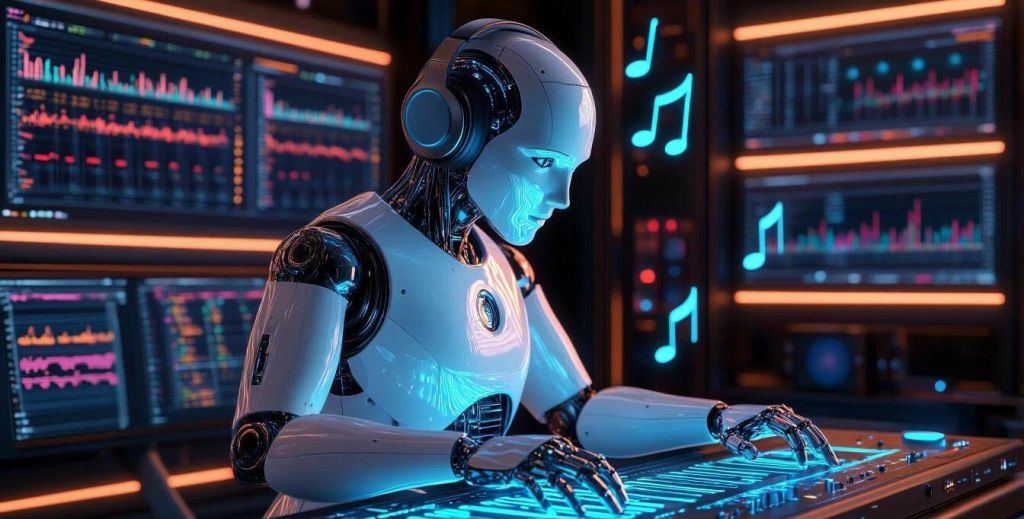
Artificial intelligence has already shaken the foundations of the music industry. From composing melodies to cloning human voices, AI is no longer a tool — it’s becoming a creator.
But as the line between human and machine artistry blurs, one question keeps growing louder: who truly owns creativity when a song is born from code, not emotion?
🎤 When Machines Start to Sing
Just a few years ago, the idea of a computer writing a hit song sounded futuristic — almost absurd. Today, AI musicians are releasing tracks that make it to Spotify playlists and even viral TikTok trends.
We’re witnessing the rise of fully synthetic performers, trained on thousands of human songs to mimic style, rhythm, and emotional tone.
In fact, some of the first “AI artists” are already making headlines — as explored in AI Musicians: Will the Next Superstar Be a Machine?.
It’s exciting, yes — but it also opens Pandora’s box of ethical dilemmas.
🧠 The Deepfake Dilemma: When Voices Aren’t Real
One of the most controversial uses of AI in music is voice cloning. Neural networks can now reproduce a singer’s tone, accent, and even emotional nuances so precisely that most listeners can’t tell the difference.
While this technology can revive lost voices or create virtual duets between living and deceased artists, it’s also being misused. “Deepfake songs” — AI tracks that mimic famous singers without consent — are spreading fast.
For example, AI-generated tracks imitating Drake or The Weeknd have gone viral, raising questions like:
• Who owns the rights to a cloned voice?
• Can an artist copyright their vocal identity?
• And what happens when fans can’t distinguish between the real and the artificial?
These are not just technical questions — they cut to the core of artistic integrity.
⚖️ Who Owns an AI-Created Song?
In traditional copyright law, ownership is granted to the creator. But what happens when the “creator” is an algorithm trained on millions of existing songs?
If an AI learns from the works of Beethoven, Beyoncé, and Billie Eilish, and then writes a melody — does it belong to the programmer, the dataset, or the machine itself?
Currently, most legal systems agree that only humans can hold copyright. However, this view is being challenged as AI-generated works become indistinguishable from human ones.
The debate is particularly intense in the music industry, where style imitation has always been part of the art — but AI takes it to another level.
For a broader perspective on how artificial intelligence is transforming the creative process, check out From Studio to Stage: How AI Is Transforming Music Production and Performance.
AI isn’t just helping artists; it’s starting to become one.
💡 Ethics vs. Innovation: A Balancing Act
Ethics often lags behind technology. While AI gives musicians powerful creative tools, it also blurs moral boundaries. Imagine a young producer using an AI model trained on thousands of existing songs — is it innovation or plagiarism?
Music companies are beginning to respond. Some streaming platforms have already removed AI-generated tracks that mimic artists without consent. Others, like Universal Music Group, are pushing for new frameworks to protect human talent.
Meanwhile, AI developers argue that creativity should be shared — that these tools democratize music production by giving everyone access to infinite inspiration.
It’s a fine balance: preserving authenticity while embracing progress.
🎧 Collaboration or Competition?
Many artists are choosing collaboration over confrontation. They use AI to enhance their music — from generating harmonies to mixing tracks — without giving up authorship.
In this way, AI becomes an assistant rather than a rival.
This hybrid model is already producing some fascinating results.
As explored in the follow-up article [AI Musicians: Will the Next Superstar Be a Machine? Part II, artists who embrace AI often find new forms of expression they never imagined before.
The future may not be “humans versus machines,” but humans with machines — working together to push creativity beyond its current limits.
🪶 Can Machines Feel?
Perhaps the biggest philosophical question is whether AI can ever truly *feel* what it creates.
Music is not just sound — it’s emotion, memory, and lived experience. While AI can analyze patterns and simulate sadness or joy, it doesn’t experience them.
So even if an AI song sounds perfect, it might still lack the invisible thread of humanity — the vulnerability, imperfection, and soul that makes music universal.
🌍 The Road Ahead: Redefining Creativity
We are standing at a historic crossroads.
AI-generated music challenges our understanding of authorship, ethics, and even what it means to be creative. But rather than fearing it, the industry has an opportunity to redefine those concepts.
What if future copyright laws include “AI collaboration credits”?
What if artists start licensing their voiceprints like samples?
And what if we start valuing not only who made the song, but how it was made?
The conversation is only beginning — and every track released by an algorithm is another verse in that global debate.
🎵 Final Note
Whether you see AI as a threat or a muse, one thing is clear: music will never be the same again.
As technology continues to evolve, so will our definition of creativity — and perhaps that’s the most human thing about it. -
From Studio to Stage: How AI Is Transforming Music Production and Performance

For decades, making music required expensive studio time, technical expertise, and often a team of professionals. Today, artificial intelligence is changing that reality. From AI mixing assistants to generative music tools, technology is making music creation more accessible, faster, and more flexible than ever before. Whether you’re a bedroom producer, a professional sound engineer, or a performing artist, the new wave of AI-powered tools is reshaping every stage of the creative process — from the first demo to the final encore.
Smarter Studios: AI in Music Production
Modern music production involves countless technical steps: recording, cleaning up audio, mixing, mastering, and more. Traditionally, each step required specialized skills and hours of meticulous work. Now, AI is taking on some of the heaviest tasks, helping creators focus on what matters most — their music.
• iZotope offers AI-driven mixing and mastering assistants that analyze your tracks and suggest professional-grade EQ, compression, and effects settings in seconds.
• LANDR automates mastering, delivering polished, ready-to-release tracks instantly, even for beginners.
• AIVA, a generative AI composer, can create original melodies, harmonies, and full arrangements in a variety of styles.
• Adobe Project Music GenAI is pushing the boundaries even further, allowing artists to generate and reshape musical ideas through simple text prompts.
These tools don’t replace human creativity; they amplify it. By automating tedious technical steps, AI gives musicians more time to experiment, write, and play.
👉 Curious about the rise of AI musicians themselves? Check out our recent articles: “AI Musicians: Will the Next Superstar Be a Machine?” and its follow-up here.
AI on Stage: Live Performances Reimagined
One of the most exciting frontiers of AI in music is live performance. Artists are no longer limited to pre-recorded backing tracks or static visuals. Instead, they can use real-time generative systems to create dynamic, evolving performances that react to the music and the audience.
For example:
• AI can generate live visuals synchronized with beats and melodies, turning concerts into immersive multimedia experiences.
• Generative accompaniment tools can follow the performer’s rhythm and style, improvising harmonies, beats, or ambient textures on the fly.
• Voice-processing AIs can instantly transform vocals, adding harmonies, pitch effects, or stylistic filters in real time.
These innovations mean that even solo performers can create rich, layered shows that once required entire bands, crews, and production teams.
Making Music More Accessible
Perhaps the most transformative impact of AI is accessibility. High-quality music production is no longer locked behind expensive gear or years of formal training. Anyone with a laptop and an idea can use AI tools to produce, master, and perform their music. This democratization is opening the door to new voices and genres that might never have emerged in the traditional system.
For young artists, AI can serve as both teacher and collaborator. It provides instant feedback, helps polish ideas, and removes many of the barriers that used to slow down creativity. For professionals, it offers efficiency and new creative possibilities.
The Human Touch Still Matters
Despite all the hype, AI is not replacing musicians. It’s expanding what’s possible. The emotional nuance, storytelling, and cultural context that humans bring to music remain irreplaceable. AI may generate a perfect chord progression or mix a flawless track, but it’s the artist who gives the music meaning.
The most exciting developments are happening at the intersection of human creativity and machine intelligence — where technology becomes a partner, not a substitute.
A New Era of Creativity
From studio tools to live stage performances, AI is redefining how music is made and shared. As these technologies continue to evolve, we can expect even more hybrid collaborations between humans and machines, leading to new sounds, formats, and experiences.
Whether you’re producing your first track or performing in front of thousands, AI can help you push creative boundaries and bring your musical vision to life like never before. -
🎹 AI Musicians: Will the Next Superstar Be a Machine?

In recent years, artificial intelligence has made remarkable inroads into creative fields, from visual arts to literature. Yet perhaps the most intriguing frontier lies in music. Imagine a world where the next global superstar is not a human, but a fully virtual artist created entirely by AI. From AI vocalists to digital DJs, the landscape of music is poised for a revolution. But how will audiences react when the “soul” behind a song is code and algorithms rather than a human heart?
Virtual Artists and AI Composers
AI-powered music is not just an abstract concept; it is already here. Platforms like OpenAI’s Jukebox and Amper Music can compose songs in various genres, mimicking the styles of famous musicians with remarkable accuracy. Beyond mere composition, fully virtual artists are emerging. These AI musicians are designed to perform live digitally, interact with audiences, and even release albums.
Take, for instance, Hatsune Miku, a Japanese virtual singer whose voice is synthesized and whose performances take place as holographic concerts. Another example is FN Meka, an AI-generated rapper designed to resonate with Gen Z audiences. And in the realm of electronic music, AI DJs are beginning to curate sets, blending tracks in real-time based on listener preferences. These innovations blur the line between human creativity and machine generation, challenging traditional notions of artistry.
Audience Reactions: Fascination and Skepticism
The reception of AI-generated music is a mixed bag. Some fans marvel at the technological ingenuity, finding the novelty exciting and engaging. AI performers can produce endless content without fatigue, offer interactive experiences, and explore sonic possibilities that humans might overlook.
However, critics argue that music created by AI lacks the emotional depth and narrative that human musicians bring. Can a machine truly capture heartbreak, joy, or nostalgia in the same way a human does? While AI can analyze patterns of emotion in music and replicate styles convincingly, the question of “soul” remains contentious. Some listeners feel a disconnect, noting that knowing a song is entirely machine-made changes the listening experience.
Digital Concerts and the Future of Live Music
The rise of digital concerts is another indicator of AI’s growing influence. Virtual stages can host holographic or fully animated performers, allowing millions of fans worldwide to attend simultaneously. In these settings, AI musicians can tailor performances to audience reactions in real-time, adjusting tempo, energy, and even visual effects dynamically.
As immersive technologies evolve, these AI shows might rival traditional live performances in both spectacle and interactivity. The COVID-19 pandemic accelerated the acceptance of digital concerts, showing that audiences are willing to embrace non-traditional live experiences. As a result, AI musicians are not just novelties—they are becoming integral players in the entertainment industry.
Creativity Without Humans: Ethical and Cultural Questions
The prospect of AI as a primary creator raises ethical and cultural considerations. Who owns a song written entirely by a machine? How will royalties and intellectual property laws adapt? Additionally, the cultural impact of replacing human artists with AI-generated ones could be profound. Music is historically a reflection of human experience, emotion, and social context. If AI begins to dominate the charts, will the cultural “soul” of music shift, or will it become purely data-driven?
The Balance Between Innovation and Humanity
AI musicians challenge us to reconsider what we value in music. While machine-generated compositions can astound technically, many argue that the human element—the stories, struggles, and emotions—cannot be replicated algorithmically. Yet, collaboration between humans and AI might strike a balance. Some artists are already experimenting with AI co-creators, combining human intuition with computational creativity to push the boundaries of sound.
As this field grows, it is worth exploring previous discussions on AI creativity in music. Our earlier article, AI Musicians: Will the Next Superstar Be a Machine?, delves into the implications of AI performers and audience reception, providing additional insight into how the next generation of music might evolve.
Conclusion
The emergence of AI musicians poses a profound question: can a machine ever truly become a superstar? While the technology to create virtual artists is advancing rapidly, human perception of music remains deeply tied to emotion, authenticity, and shared experience. Perhaps the future will not be a competition between humans and machines, but a collaboration—where AI enhances creativity while humans retain the narrative and emotional core of art.
For readers fascinated by this evolving intersection of technology and creativity, AI-generated music is not just a curiosity—it is a glimpse into the potential future of entertainment. -
AI in the Spotlight: How Intelligent Machines Are Shaping the Future of Music

The music world is on the brink of a revolution. Artificial intelligence is no longer confined to the background, assisting with mixing tracks or analyzing data — it is stepping into the limelight itself. Today, AI can compose entire songs, generate human-like vocals, remix hits in seconds, and even perform live alongside human artists. But this evolution raises deeper questions: how will the role of the musician change, and can a machine ever truly capture the emotional core of music?
AI as a Creative Force
Traditionally, composing music was considered a deeply human activity — a product of emotion, intuition, and lived experience. Today, AI is challenging this assumption. Platforms such as OpenAI’s Jukebox, AIVA, Amper Music, and Suno can produce tracks across genres with impressive originality. By analyzing thousands of songs, these systems learn patterns, harmonies, and rhythms, producing compositions that are often indistinguishable from human-created music.
The most striking innovation is style fusion. AI can instantly combine influences from different eras and genres, creating unique blends that a human composer might spend months perfecting. From classical-infused synthwave to jazz-inspired electronic beats, AI is capable of pushing musical boundaries beyond traditional limits.
Performing Beyond Human Constraints
Beyond composition, AI is increasingly stepping into performance. Voice synthesis technology can mimic famous singers or generate entirely new voices. Virtual idols such as Japan’s Hatsune Miku opened the door, but modern AI goes further — improvising melodies, modulating emotion, and interacting with audiences in real-time.
Imagine attending a concert where the lead performer is a digital avatar, dynamically responding to the audience and adapting the setlist in real time. This blend of human and machine performance challenges traditional notions of what it means to “perform” music, creating experiences that were unimaginable a decade ago.
Collaboration Between Humans and AI
AI doesn’t have to replace musicians — it can become a collaborative partner. Many contemporary artists already use AI to generate chord progressions, propose lyrics, or remix existing tracks. This collaborative workflow resembles a feedback loop: the human feeds in ideas, the AI responds with multiple variations, and together they refine the final piece.
Such collaborations expand creative possibilities, pushing artists to experiment with genres and concepts they might never have explored alone. AI becomes a co-creator, amplifying human imagination rather than substituting it.
Ethics, Ownership, and Cultural Implications
The rise of AI musicians also brings ethical questions. If a song created by AI becomes a hit, who owns it — the programmer, the user, or the machine itself? Copyright law is struggling to catch up. Moreover, the use of “deepfake vocals” — AI-generated voices mimicking real singers — raises questions about consent, identity, and cultural integrity.
Audiences may wonder whether music created entirely by algorithms can carry the same emotional resonance as human compositions. Will authenticity still matter in a world where both virtual and hybrid artists dominate the charts?
To explore these legal and cultural dilemmas, see:
👉 The Ethics of AI-Generated Music: Who Owns Creativity?
The Emergence of Virtual Superstars
AI is not just a tool; it is emerging as an artist in its own right. In the next decade, virtual superstars — partially or fully AI-driven — could rival human performers in popularity. Personalized AI tracks, virtual concerts, and adaptive music experiences will redefine fan engagement and the very concept of stardom.
For a perspective on AI’s role in reshaping performance and production, see:
👉 From Studio to Stage: How AI Is Transforming Music Production and Performance
Will Machines Understand Emotion?
The ultimate challenge for AI is emotional depth. Music is more than notes and rhythm — it is storytelling, shared experience, and human connection. While AI can analyze patterns and recreate stylistic elements, its ability to evoke genuine emotion remains under scrutiny. The future will likely see hybrid compositions where AI enhances emotional impact rather than creating it in isolation.
Conclusion: A Symbiotic Future
The next music superstar may well be a machine, or a hybrid of human and AI collaboration. Artificial intelligence is reshaping composition, performance, and audience engagement, challenging our concepts of creativity, authorship, and artistry. Rather than replacing musicians, AI is expanding their possibilities, enabling unprecedented experimentation and new forms of musical expression.
As the spotlight shifts, one thing is certain: the future of music will be unlike anything we have experienced — a symphony where human imagination and artificial intelligence play in harmony. -
🎶 Music, People and Space: The Three Forces Shaping the Festival World

Music festivals have evolved far beyond being just seasonal gatherings with good sound systems. Today, they represent living ecosystems—dynamic spaces where sound, human connection, and unique locations intertwine to create cultural phenomena that shape trends, values, and even identities. To understand why festivals captivate millions around the world, we need to look at the three key forces that form their foundation: music, people, and space.
🎧 1. Music — The Pulse That Sets Everything in Motion
At the heart of every festival lies music. It’s the invisible thread that connects strangers, synchronizes emotions, and creates unforgettable shared moments. Whether it’s the hypnotic beat of electronic music under a starry desert sky or a live guitar solo echoing across a mountain valley, sound is the central force that gives festivals their soul.
But music at festivals is not static. It evolves, expands, and travels across continents. New genres are constantly emerging, traditional styles are being reinvented, and stages are becoming platforms for cultural exchange. Modern festivals are no longer confined to one region—they are growing across the globe, bringing new sounds to unexpected places. As explored in The Global Expansion of Music Festivals: How New Stages Are Shaping Tomorrow’s Sound, this global growth is transforming the musical landscape and giving rise to vibrant hybrid scenes where local traditions meet global trends.
This constant musical evolution is what draws both loyal fans and curious newcomers year after year. People don’t just attend festivals to hear familiar songs—they come to discover new sonic experiences that can only happen in these unique, collective settings.
🧍♀️🧍 2. People — The Collective Energy That Brings Festivals to Life
If music is the pulse, people are the lifeblood. No matter how impressive the stage design or lineup might be, a festival without its crowd would be nothing more than an empty field. The real magic begins when thousands of individuals come together, each contributing their own energy, stories, and emotions to the shared space.
Festivals create temporary communities—microcosms where social barriers dissolve and strangers connect effortlessly. Dancing side by side, singing in unison, and simply being present in the same emotional wave fosters a powerful sense of belonging. This psychological phenomenon has been explored in The Psychology of Live Music: Why Festivals Make Us Feel Alive, which highlights how collective experiences trigger intense emotional responses, release feel-good hormones, and even change how we perceive ourselves.
In these moments, festivals become more than events—they turn into shared rituals. Many attendees describe their experiences not just as fun weekends, but as transformative journeys that leave a lasting imprint. The human connection at festivals is a powerful reminder of our innate need to belong and celebrate together.
🌍 3. Space — The Physical Canvas That Shapes the Experience
While music and people give festivals their spirit, space gives them their body. The location of a festival is not just a backdrop; it’s an active participant in the experience. Whether it’s a sun-drenched beach, a remote forest, a bustling city center, or a historic castle courtyard, the setting profoundly influences the festival’s atmosphere, identity, and cultural meaning.
The global spread of festivals has opened up new types of spaces for artistic expression. Desert landscapes have become iconic backdrops for electronic music events; urban festivals transform city squares into living stages; remote natural environments offer immersive escapes where music and nature merge. As festivals continue to expand geographically, they bring culture to communities that may have never experienced such gatherings before—reshaping local identities and economies in the process.
Space also determines how people interact: the way sound travels through mountains or how lights reflect off water can enhance the sensory impact. Well-designed spaces can amplify the emotional connection between music and crowd, turning a concert into something almost transcendent.
✨ When Music, People and Space Align
The true magic of festivals happens when these three forces align perfectly. Picture it: a groundbreaking live set (music) echoing across a breathtaking coastal landscape (space), while thousands of strangers dance together as one (people). In these moments, festivals transcend their physical boundaries and become cultural touchstones—events that shape memories, inspire art, and influence entire generations.
This synergy is why festivals continue to grow, evolve, and capture imaginations worldwide. Each element—music, people, and space—can exist independently, but only together do they create the kind of immersive, transformative experiences that define the modern festival movement.
🌐 A Living Cultural Ecosystem
Music festivals today are more than weekend getaways; they are living cultural ecosystems. They spread new sounds, unite diverse communities, and reimagine the use of spaces in bold and unexpected ways. Understanding the interplay of music, people, and space allows us to appreciate why festivals remain such powerful cultural forces.
Whether you’re drawn to the beats, the crowd, or the breathtaking locations, every festival experience is shaped by this timeless triad. And as the world continues to change, these three forces will keep evolving—ensuring that the festival scene remains vibrant, unpredictable, and endlessly inspiring. -
🎧 The Psychology of Live Music: Why Festivals Make Us Feel Alive
There’s something almost magical about being in a crowd, surrounded by sound, lights, and thousands of people who all sing the same lyrics.
It’s not just music — it’s a shared heartbeat.
But what exactly happens to our mind and body during live performances that makes them feel so alive?
Let’s dive into the fascinating psychology behind festivals and the collective power of sound.
🎶 1. The chemistry of joy: music as a natural high
When we listen to live music, our brain releases a cocktail of feel-good chemicals — dopamine, oxytocin, and endorphins.
That’s why you can feel pure euphoria when the beat drops or when your favorite artist steps onto the stage.
Unlike recorded tracks, live music engages multiple senses — sight, sound, vibration, even touch — creating a **multi-sensory reward** that the brain interprets as deeply pleasurable.
It’s the same mechanism that explains why people can feel “high” without any substances — the body literally floods itself with happiness hormones.
💓 2. The power of belonging
Festivals are not just concerts — they’re temporary communities.
Thousands of strangers dance, sing, and experience emotions together, forming a powerful sense of belonging that psychologists call collective effervescence.
This shared energy is ancient. It’s the same phenomenon that made humans gather around fires, dance in rituals, and celebrate life long before the word “festival” existed.
At that moment, you stop being “me” — you become “us.”
That’s why even introverts often describe festivals as deeply emotional and liberating experiences.
🔊 3. Rhythm and resonance: why sound moves us physically
Music doesn’t just reach our ears — it resonates through our entire body.
The low frequencies of drums and bass literally sync with our heartbeat, creating a rhythm that aligns with our internal tempo.
This physical connection makes us move, dance, jump — often without thinking.
Our brains are wired for rhythm: neuroscientists have found that group movement, like dancing in sync, increases trust and social bonding.
So yes, when you lose yourself in the crowd — that’s biology, not chaos.
🧠 4. Escaping routine, embracing freedom
At a festival, time feels different.
There’s no 9-to-5, no deadlines — just sound, movement, and light.
Psychologists call this state “flow” — a moment when you’re fully absorbed in what’s happening, free from self-consciousness or worry.
In this state, people report higher levels of happiness, creativity, and emotional release.
Live music acts like a reset button for the mind: it helps us let go of daily stress and reconnect with our authentic self.
🌍 5. How festivals amplify the experience
Music alone can trigger strong emotions — but festivals amplify everything.
The visuals, community, and immersive atmosphere create a space where art becomes a collective experience rather than individual entertainment.
That’s one reason why festivals have become more global and inclusive than ever.
They’re not just about the music anymore — they’re about connection, sustainability, and emotional rebirth.
We explored this global transformation in detail in our article The Global Expansion of Music Festivals: How New Stages Are Shaping Tomorrow’s Sound.
Together, these two stories — the psychology of live music and the evolution of festivals — show why the modern stage has become humanity’s emotional playground.
💫 6. Why it matters now more than ever
In an age of screens and isolation, live music offers something irreplaceable — real connection.
It reminds us that we’re human: emotional, spontaneous, and wired for shared experience.
Every cheer, every bass drop, every chorus we sing together — it’s not just sound.
It’s our collective heartbeat echoing across the crowd.
And maybe that’s why, no matter how advanced technology becomes, nothing will ever replace the simple, raw magic of live music.
🌈 Final note
Next time you find yourself at a concert or festival, pay attention to what’s really happening — not just around you, but inside you.
That flutter in your chest, the goosebumps, the tears, the laughter — it’s your brain and heart remembering what it feels like to be truly alive. -
The Global Expansion of Music Festivals: How New Stages Are Shaping Tomorrow’s Sound

For decades, music festivals were often associated with iconic names like Glastonbury in the UK, Coachella in the U.S., or Tomorrowland in Belgium. These were not only places to hear live music but also cultural landmarks, shaping entire generations of fans and trends. But in the last few years, something fascinating has been happening: the festival map is expanding dramatically, bringing world-class music experiences to unexpected locations across Europe, the Middle East, Latin America, and beyond. 🌍🎶
This evolution signals more than just bigger line-ups. It reflects changing audiences, the globalization of the music industry, and a hunger for unique experiences that go far beyond the traditional concert setting. Let’s dive into some of the most striking examples and explore what they mean for artists, fans, and the future of live music.
🎧 Afterlife Festival: From Ibiza Nights to a Global Stage
One of the most talked-about newcomers is the Afterlife Festival, born out of the legendary Ibiza club scene. Known for its immersive visuals and hypnotic techno sounds, Afterlife has built a reputation for transforming venues into otherworldly journeys. Now, the festival has expanded with events in Mexico and Spain, aiming to merge cutting-edge stage design with the spiritual vibe of electronic music.
What makes Afterlife stand out is its dedication to storytelling. Instead of being “just another rave,” it blends music, art, and stage technology to create a multi-sensory narrative. This new approach is shaping how younger audiences expect festivals to feel: less about simply watching DJs and more about living inside an experience.
🌊 Adriatic Sound Festival: Italy’s Bold Entry
Italy has always been a country deeply tied to opera, symphony, and traditional performance. But recently, it has stepped into the global electronic and pop festival scene with the Adriatic Sound Festival, located on the picturesque coastline. Imagine house and techno music echoing across the sea, with stages lit under Mediterranean skies.
For Italy, this isn’t just about entertainment—it’s cultural reinvention. Festivals like Adriatic Sound attract not only local fans but also travelers who are looking for something fresh beyond the mainstream European circuit. Tourism boards are noticing too: festival tourism is becoming a powerful tool to bring in younger international visitors who want both culture and nightlife in one package.
🏜️ 1001 Nights Festival in Saudi Arabia: A Bold Cultural Shift
Perhaps the most surprising development is in the Middle East. Saudi Arabia’s “1001 Nights Festival” reflects a radical change in how the kingdom positions itself globally. A decade ago, large-scale Western-style music festivals would have been unimaginable there. Today, they are symbols of a country opening up culturally and economically.
The line-ups often mix global EDM stars with regional talent, creating a unique blend of East and West. Beyond music, 1001 Nights is also part of a larger vision: positioning Saudi Arabia as a hub for international events, tourism, and cultural exchange. While some critics question the motivations, there’s no denying the impact—it places the region firmly on the world’s festival map.
🎶 Beyond Music: Why This Trend Matters
What connects these festivals—whether in Spain, Italy, Mexico, or Saudi Arabia—is not just geography. It’s the recognition that music festivals today are multi-dimensional cultural products. They combine:
• Music as the core draw (of course),
• Immersive art and visuals,
• Tourism and economic development,
• Identity and branding for cities or nations,
• Social experiences designed for digital sharing.
In other words, a modern festival is both a concert and a story, a cultural statement and an Instagrammable experience. Audiences don’t just buy a ticket to hear music—they invest in a lifestyle moment that blends travel, entertainment, and belonging.
🌐 The New Festival Geography
Why is this expansion happening now? A few key reasons:
1. Globalized Music Consumption
Thanks to streaming platforms, fans in Buenos Aires or Riyadh are listening to the same playlists as those in Berlin or Los Angeles. This creates universal demand for global stars everywhere.
2. Economic Shifts
Emerging markets like the Middle East and parts of Asia have both the financial resources and the ambition to host large-scale cultural events as a way to diversify their economies.
3. Cultural Curiosity
Younger generations are eager to travel for unique experiences. A festival in a coastal Italian town or in the Arabian desert offers something more memorable than yet another trip to an oversaturated event in Western Europe.
4. Post-Pandemic Revival
After COVID-19, the appetite for live events surged. Organizers are seizing this momentum to introduce new concepts and locations.
🚀 What’s Next for Global Festivals?
Looking ahead, the growth of new festivals suggests that the future of live music will be more decentralized and diverse. We may no longer talk only about the “big three” festivals in the West but instead recognize a broader ecosystem where different regions contribute their own unique flavor.
• Latin America will continue to grow as a powerhouse, thanks to artists like Bad Bunny and Karol G bringing global attention.
• The Middle East and Asia will invest heavily in festivals as part of tourism strategies.
• Europe will keep reinventing itself with boutique festivals offering more intimate, curated vibes.
The big question is whether these new festivals can maintain authenticity, or if the race for global attention will make them too commercialized. Either way, the expansion is already reshaping how we think about music, travel, and culture in the 21st century.
🎤 Final Thoughts
Music festivals have always been more than concerts—they are celebrations of identity, freedom, and community. What’s changing now is the map itself: from Ibiza to Mexico, from Italy to Saudi Arabia, the sound of tomorrow is being staged on new, diverse, and unexpected shores.
And for music fans? It’s an invitation to pack a bag, book a ticket, and discover how music feels when played under different skies. 🌍✨ -
The Sound Ecosystem: How Listening Habits Reshape Algorithms

For many of us, music streaming has become a second nature — an almost invisible background that accompanies work, relaxation, commuting, and even sleep. Platforms like Spotify, Apple Music, and YouTube Music have mastered the art of recommendation, creating playlists that seem to know us better than our closest friends. But behind this seamless experience lies an intriguing feedback loop: while algorithms shape our listening habits, our habits, in turn, reshape the algorithms themselves.
This mutual influence creates what we can call a sound ecosystem — a dynamic interplay between technology and human psychology. To understand how this ecosystem functions, it’s important to look at both sides of the relationship: how platforms guide us toward comfort listening and how our daily choices fine-tune the very systems that guide us.
Algorithms as Habit Architects
Streaming platforms are not just passive distributors of songs; they actively construct the soundtrack of our lives. Through data-driven personalization, they notice which tracks we skip, which ones we repeat, and even the time of day we prefer certain moods. Over time, they begin to design listening environments that reflect our unique tastes.
As explained in Digital Sanctuary: How Streaming Algorithms Shape Our Comfort Listening Habits, algorithms create digital comfort zones, ensuring we’re rarely exposed to music that feels out of place. The result? We begin to associate streaming services not just with entertainment, but with emotional stability and predictability.
Human Patterns Hidden in the Music
On the other hand, our brains are not neutral in this exchange. There are mathematical and psychological reasons why certain songs calm us, trigger nostalgia, or help us concentrate. As explored in The Mathematics of Comfort Listening: Why Certain Songs Calm Our Minds, rhythmic patterns, melodic repetitions, and harmonic stability all influence how safe or soothing a track feels.
Every time we gravitate toward these “comfort tracks,” we feed the algorithms a signal: *this works*. And the more consistently we repeat those preferences, the more confident the system becomes in reinforcing them.
The Feedback Loop: Users Training the Machines
Here lies the essence of the sound ecosystem: it’s not a one-way street. While algorithms appear to control what we hear, they are in fact constantly retrained by our reactions.
• Skip a track too early? The system marks it as a poor fit.
• Replay a song ten times in a row? It identifies that track’s qualities as part of your comfort zone.
• Listen to acoustic playlists during late nights? The system links time and context to mood-based recommendations.
This creates a fascinating paradox: the more we listen, the more we “teach” the platforms. In effect, we’re not only consuming digital music but also unconsciously co-programming the very algorithms that recommend it.
The Risks of a Closed Loop
While this dynamic can feel personalized and safe, it also comes with challenges. If algorithms mostly reinforce our existing preferences, they can inadvertently create echo chambers — musical bubbles where discovery slows down and diversity fades. Over time, we may find ourselves recycling the same moods, rhythms, and genres, without realizing how much the system has filtered out.
This isn’t necessarily negative; comfort listening serves real psychological needs. Yet the danger lies in losing balance between familiarity and exploration. The healthiest ecosystems are not stagnant but adaptive, mixing stability with novelty.
How to Break the Pattern (Without Losing Comfort)
So how can listeners remain active participants in this ecosystem, instead of passive recipients? Here are a few strategies:
1. Curate your own lists: Don’t rely solely on “Made for You” playlists — create custom ones to push your boundaries.
2. Engage with discovery features: Use “Radio,” “Discover Weekly,” or similar options that nudge you toward new genres.
3. Switch contexts: Try changing your environment when listening — new places can trigger different choices.
4. Be mindful: Notice when comfort listening turns into repetition fatigue. Sometimes, deliberately seeking novelty keeps the ecosystem healthy.
The Future of the Sound Ecosystem
As streaming technology advances, algorithms are likely to become even more responsive, not just to what we listen to, but to how we feel in real time. Future platforms might track biometrics, moods, or even brain activity to refine recommendations. If that future comes, the feedback loop will only grow stronger — with humans and machines continuously shaping one another in real time.
In the end, our listening habits are not just personal quirks. They are active inputs into a vast, evolving system that blends mathematics, psychology, and technology. We don’t simply live inside digital soundscapes; we co-create them. And that realization makes us not just consumers of music, but co-authors of the algorithms themselves. -
Digital Sanctuary: How Streaming Algorithms Shape Our Comfort Listening Habits
In the age of endless playlists and algorithm-driven recommendations, the way we experience music is no longer just about personal taste or radio DJs. It is increasingly influenced by digital platforms that decide what song we hear next. For many listeners, especially when it comes to comfort listening—the music we turn to for calm, familiarity, and emotional balance—streaming algorithms now play a defining role.
The Rise of Algorithmic Playlists
When Spotify, Apple Music, and other platforms first introduced algorithmic playlists, they were designed to enhance discovery. Users were thrilled to find tracks they hadn’t heard before but that matched their preferences. Over time, however, these playlists became more than tools for exploration; they evolved into curated soundtracks for our daily lives. Comfort listening, once rooted in the repetition of familiar records, is now expanded and subtly shaped by algorithms that blend what we already love with songs we’re likely to find soothing.
Familiarity and Predictability
One of the core principles of comfort listening is familiarity. Replaying a beloved track reduces cognitive effort, provides a sense of control, and helps regulate mood. Streaming algorithms exploit this by weaving in songs with similar tempo, harmonic structure, or instrumentation to the ones we already enjoy. The result is a continuous stream that feels both familiar and fresh, maintaining comfort while avoiding monotony. This mathematical mimicry of taste effectively builds a “digital sanctuary” where users can relax without having to manually curate every playlist.
Emotional Engineering
Algorithms don’t just analyze genres or artists; they increasingly track how listeners interact with music emotionally. Skips, replays, and saved tracks feed into models that identify patterns of comfort. For example, if you always replay soft piano instrumentals late at night, the system will start offering more of them, creating a personalized soundtrack for winding down. This emotional responsiveness makes the algorithm feel almost empathetic, though it is simply pattern recognition at scale. Still, the effect on the user is profound: the algorithm seems to know not only what we like, but when we need it most.
The Risk of Over-Personalization
Yet, there’s a downside. While comfort listening thrives on familiarity, over-personalization can create an echo chamber of sameness. The very algorithms designed to expand our musical horizons may, paradoxically, narrow them. Listeners can become stuck in a loop of near-identical songs, depriving themselves of the unexpected jolts of novelty that also contribute to long-term musical satisfaction. In this sense, our digital sanctuary risks turning into a digital cocoon.
The Human Element in Comfort Listening
Despite the power of algorithms, comfort listening isn’t solely about machine-driven prediction. Human rituals—like revisiting childhood albums, listening to music shared by friends, or rediscovering forgotten artists—remain central. Many people still use streaming platforms to recreate these rituals, blending algorithmic suggestions with personal choices. The intersection of machine curation and human intention highlights the delicate balance between technological convenience and authentic emotional connection.
Looking Ahead: The Future of Comfort Listening
As artificial intelligence becomes more sophisticated, streaming services may go beyond reactive recommendations. Imagine platforms that not only learn from your history but also adjust based on biometric data, such as heart rate or stress levels, to deliver perfectly timed comfort tracks. While this vision raises privacy concerns, it also suggests a future where music and wellness become even more closely intertwined.
Conclusion
Streaming algorithms have transformed comfort listening from a purely personal ritual into a dynamic interplay between human preference and machine suggestion. They offer familiarity, emotional resonance, and convenience, crafting digital sanctuaries where listeners can retreat and recharge. But as with all technology, the challenge lies in balance: allowing algorithms to guide without letting them limit, and ensuring that our comfort listening remains as much about self-discovery as it is about self-soothing. -
The Mathematics of Comfort Listening: Why Certain Songs Calm Our Minds

In recent years, music consumption has shifted dramatically. While we still see explosive hits fueled by TikTok or Spotify playlists, another powerful trend has emerged: comfort listening. More and more people are turning to familiar, soothing sounds instead of chasing the latest experimental tracks. This movement is not only cultural but also deeply mathematical. Behind the calming effect of certain songs lie patterns, structures, and predictable frameworks that our brains find reassuring.
Why Comfort Listening is Rising
Social scientists link the rise of comfort listening to times of uncertainty. Economic recessions, political instability, and even the rapid pace of digital change make people long for something stable and familiar. Just as we rewatch favorite movies or reread beloved books, listeners increasingly return to songs that feel safe and predictable.
But music is not just emotional—it is built on mathematical foundations. From tempo to harmonic progressions, the numbers behind a song shape how it feels. Understanding these elements reveals why some tracks calm us, while others energize or disturb.
Tempo and the Heartbeat Connection
One of the strongest predictors of whether a song feels calming lies in its tempo. The average resting human heartbeat is around 60–80 beats per minute (BPM). Songs with tempos close to this range often feel natural, steady, and reassuring. Many comfort playlists feature tracks between 65–75 BPM, subtly syncing the listener’s physiology with the rhythm.
Faster tempos, such as those found in dance or hyperpop, can excite and energize. But when people crave comfort, they often gravitate toward rhythms that echo the pulse of life itself. This is why genres like lo-fi hip-hop or soft acoustic pop dominate “chill” playlists—they operate at tempos that align with our bodies.
Predictability in Harmony
Comfort listening thrives on harmonic stability. Songs that rely on common progressions—such as the famous I–V–vi–IV pattern—create a sense of resolution and predictability. The brain enjoys recognizing patterns, and when chords move in expected ways, listeners experience relief rather than tension.
Mathematically, this predictability can be modeled through probability. In Western tonal music, certain chords are statistically more likely to follow others. Comfort songs rarely deviate from these high-probability progressions, minimizing surprise and maximizing satisfaction. It is a form of musical “comfort food”: familiar, safe, and always reliable.
The Role of Intervals and Melody
Melody adds another layer of calm. Songs built on stepwise motion (moving by one scale degree at a time) feel smoother and less jarring than those with large leaps. Intervals like perfect fifths and octaves provide stability, while dissonant intervals such as tritones or minor seconds can create unease.
A mathematical way to view this is by examining interval frequency in calming vs. energetic songs. Comfort tracks statistically contain fewer dissonant jumps, sticking instead to patterns that the ear finds consonant and easy to follow. This explains why lullabies across cultures often share similar melodic contours, even when separated by geography and tradition.
Rhythmic Regularity
Another feature of comfort music is rhythmic regularity. Syncopation, polyrhythms, or sudden metric shifts are exciting in experimental music, but they demand attention and cognitive effort. By contrast, comfort tracks emphasize steady beats, even subdivisions, and predictable phrasing.
Mathematically, this reflects low rhythmic entropy. The more evenly distributed the beats, the less “surprising” the rhythm feels. Our brains crave this balance when seeking relaxation, as it requires less mental processing and reduces stress.
Timbre and Frequency Balance
Beyond rhythm and harmony, the sound quality itself—the timbre—plays a role in comfort. Songs with warm, rounded tones (acoustic guitars, soft piano, mellow synthesizers) are statistically associated with lower perceived stress. Harsh timbres, by contrast, can stimulate rather than soothe.
From a mathematical perspective, timbre relates to the distribution of frequencies. Instruments rich in even harmonics produce smoother sounds, while those with jagged, uneven overtones can feel rough. Comfort tracks often lean on instruments that generate clean harmonic spectra, aligning with our preference for stability.
The Psychology of Repetition
Repetition is a key mathematical element in comfort listening. Familiar choruses, looping beats, and recurring motifs reduce uncertainty. The brain’s reward system responds positively to recognition, releasing dopamine when we anticipate what comes next and are proven correct.
This can be expressed in terms of information theory. Songs with high repetition have lower informational complexity, which makes them easier to process. In moments of stress, our brains prefer this low-information input, much like choosing a simple puzzle over a difficult one.
Cultural and Personal Dimensions
While the mathematics of comfort listening reveal universal tendencies, personal experience also matters. A chord progression may statistically be soothing, but if it reminds a listener of a breakup, it may cause discomfort instead. Similarly, nostalgia plays a major role: tracks from one’s youth often resurface in comfort playlists because memory strengthens the emotional effect of mathematical predictability.
Globally, this explains why listeners gravitate not only to structurally simple music but also to familiar genres—be it 90s pop, early 2000s R&B, or traditional folk songs. Comfort is both numerical and cultural.
Conclusion
The rise of comfort listening highlights the deep relationship between mathematics, psychology, and culture. Calming music is not random; it is built on measurable principles: tempos near the heartbeat, predictable harmonies, consonant intervals, steady rhythms, balanced timbres, and repetitive structures. Together, these features create a sense of stability in an unstable world.
In the end, the mathematics of comfort listening remind us that numbers are not cold abstractions. They are the hidden patterns that shape our emotions, helping us find peace in sound. When we hit play on a familiar track, we are not just revisiting a memory—we are aligning ourselves with the fundamental mathematics of comfort.

 Tinytunes.app