
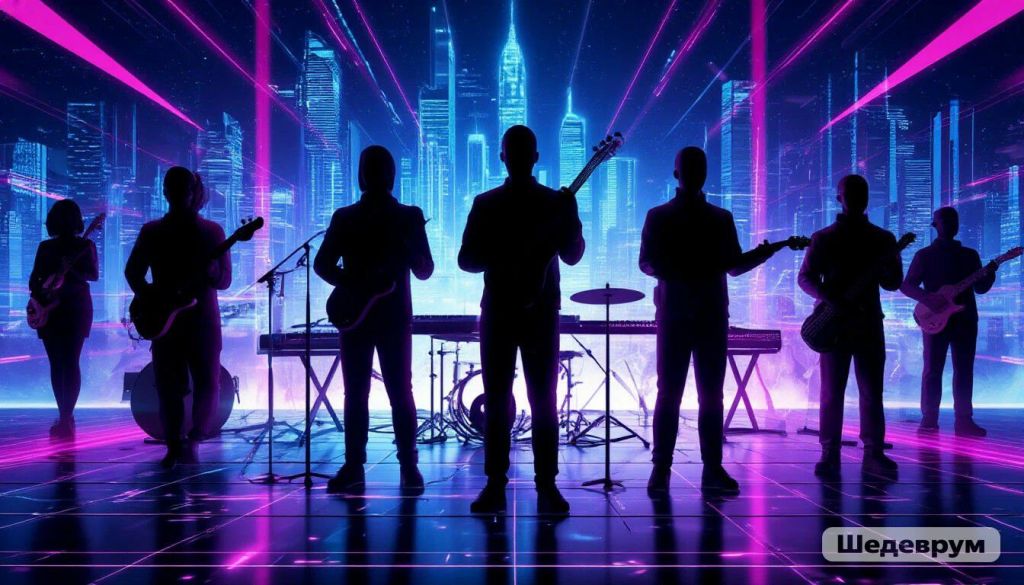
Not long ago, live concerts meant crowds, flashing lights, and the roar of thousands of fans gathered in one physical space. But in the past few years — and especially throughout 2025 — the meaning of “live performance” has evolved dramatically. The rise of virtual concerts and metaverse stages has changed not only how artists perform, but also how audiences experience music.
The global shift to digital performance spaces isn’t just a temporary experiment — it’s becoming one of the defining transformations of modern music culture.
🌐 From Streaming to Immersion
The music industry has already gone through one revolution with streaming. Yet streaming, for all its convenience, created distance between the artist and the listener. Virtual concerts have begun to close that gap — ironically, through technology.
Unlike a standard YouTube or Twitch stream, a metaverse concert doesn’t just show the artist. It places the audience inside the performance. Fans can move around virtual stages, interact with other avatars, and even influence the visual effects of the show in real time.
In a world where attention is the new currency, immersion is the next logical step.
🎮 The Technology Behind the Stage
The metaverse is powered by a combination of VR (virtual reality), AR (augmented reality), motion capture, and real-time rendering engines like Unreal and Unity.
This technology allows musicians to perform as digital avatars or blend live video with fantastical virtual worlds.
In 2025, several major artists experimented with fully virtual shows. Some recreated iconic venues in 3D; others built entire dreamscapes — glowing cities, alien deserts, or floating islands — that transformed along with the rhythm of the music. The result? A concert experience that feels less like watching and more like being inside the song.
💥 Why Fans Are Hooked
Virtual concerts offer something the real world never could: accessibility and imagination without limits.
• No geography. Fans from Tokyo to São Paulo can attend the same show simultaneously.
• No physical barriers. No travel costs, no sold-out tickets, no bad seats.
• Infinite creativity. The laws of physics no longer apply — a singer can perform in zero gravity or surrounded by fire made of light.
The emotional connection remains real, though. Many fans describe virtual concerts as “intimate,” precisely because avatars and digital environments can be tailored to reflect the artist’s vision more directly than any stage set.
💰 A New Economy for Artists
For musicians, metaverse stages open doors to entirely new revenue models.
Ticketed virtual shows, limited-edition NFT merchandise, and interactive fan passes are replacing traditional gig income.
Even independent artists can now stage immersive performances without renting venues or hiring massive crews.
Platforms like Wave, Stageverse, and Roblox Live have become testing grounds for both established names and newcomers. The lower barrier to entry means experimentation is thriving — the kind of creative chaos that often drives new genres and fan communities.
🔗 The Connection to 2025’s Music Trends
This transformation didn’t happen in isolation.
As discussed in Music in 2025: The Sounds, Trends, and Hits That Defined the Year, technology and innovation dominated the soundscape of the year — from AI-produced tracks to genre fusion born on social media.
Virtual concerts are the natural next step in that same story: the merging of creativity, tech, and human emotion into one immersive experience.
⚡ Challenges Ahead
Despite the hype, the virtual live music space faces several challenges.
• Technical limitations: latency, hardware cost, and connectivity can still disrupt the experience.
• Authenticity: some fans still crave the sweat, chaos, and imperfections of real-life concerts.
• Monetization balance: how to charge fairly for a digital ticket without alienating loyal listeners.
These issues aren’t dealbreakers — they’re growing pains of an emerging medium. Just as early streaming faced criticism before becoming mainstream, the metaverse will refine itself as technology and expectations evolve.
🚀 The Future of “Live” Music
By 2030, it’s likely that the term live music will no longer refer strictly to physical presence.
Hybrid concerts — blending real and virtual worlds — may become the standard.
Imagine an artist performing in front of a small real audience, while millions attend digitally through VR, with synchronized lighting and sound bridging both realities.
The metaverse doesn’t replace live shows — it expands them.
For artists, it’s a new canvas.
For fans, it’s a new dimension of connection.
And for the music industry as a whole, it’s a reminder that innovation never sleeps — it just gets louder.
✨ Final Thoughts
Virtual concerts are not the future — they are already the present. The lines between stage and screen, audience and avatar, are blurring faster than ever.
Music has always evolved alongside technology: from vinyl to MP3, from concerts to streams, and now — from reality to metaverse.
Whether you’re a creator or a listener, one thing is certain: the next great live performance might not happen *on Earth* at all, but somewhere in the digital sky, where the beat never stops.
 Tinytunes.app