
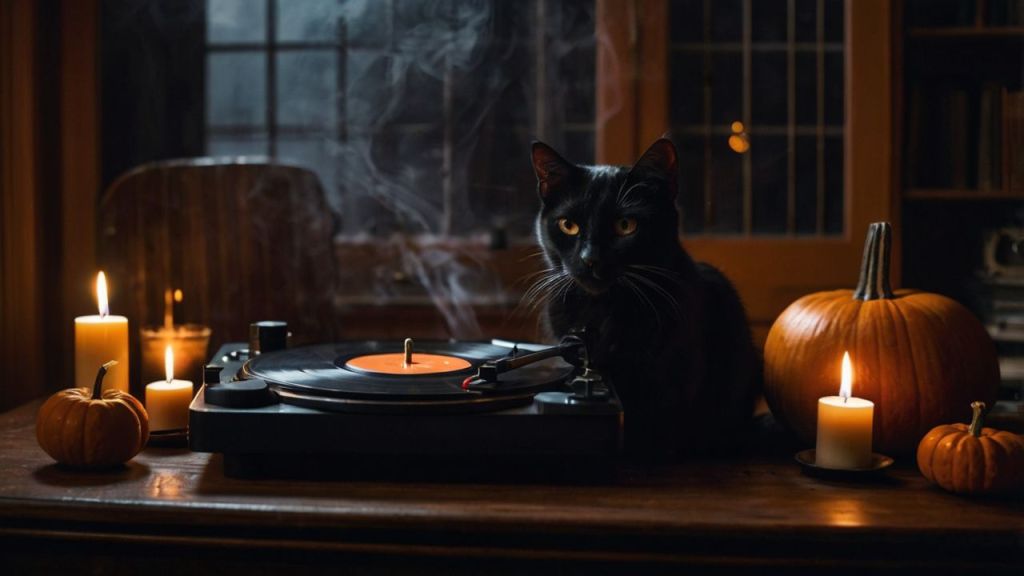
Every year, when October hits and the air turns crisp, you can hear Halloween arriving long before you see the decorations. It’s in the slow creak of a gate, the distant echo of an organ, the bass line from a playlist that suddenly sounds a little darker than usual. Music is what turns an ordinary night into that familiar mix of mystery, nostalgia, and fun-sized fear.
In my recent article about the history of Halloween and its ancient roots, I talked about how this holiday grew out of old rituals marking the shift between light and dark. Those ancient sounds — drums, chants, fire crackles — were the first soundtracks of the spooky season. Fast forward a few thousand years, and the instruments have changed, but the goal hasn’t: we still use music to summon a certain kind of energy. Halloween energy.
👻 From Ritual Rhythms to Cinematic Tension
Long before anyone pressed “play” on a playlist, people created soundscapes to chase away spirits and celebrate the unknown. Those early beats eventually found new life in gothic church organs and, centuries later, in cinema.
Once movies entered the picture, Halloween got its permanent sound identity: suspense, dissonance, and that thin line between tension and release. John Carpenter’s Halloween theme, for example, did more than scare people — it rewired our brains to associate a few piano notes with danger.
Even now, composers and producers borrow those same tricks. It’s not just nostalgia; it’s sound psychology.
🦇 Pop Culture’s Perfect Mix of Fear and Fun
The beauty of Halloween music is that it’s both scary and silly — and it knows it. The 1960s gave us playful hits like Monster Mash, while the ’80s brought a mix of horror movie scores and pop anthems like Thriller that made “spooky” cool. Since then, Halloween playlists have turned into their own genre: a mash-up of darkwave, horror synths, gothic rock, metal, trap beats, and cinematic ambience.
Today, Spotify and Apple Music drop endless themed playlists every October — “Haunted Beats,” “Witchy Pop,” “Dark Disco” — and TikTok adds its own layer, remixing everything from movie sound effects to lo-fi ghost stories.
What’s interesting is how technology keeps redefining what “scary” sounds like. AI-generated horror soundscapes, for example, are becoming part of the mix — eerie, unpredictable, and somehow even more unsettling because they don’t sound fully human.
🧛 Why Certain Sounds Give You Goosebumps
There’s actual science behind that chill you get from the right note. Minor keys, low frequencies, and dissonant intervals mess with our sense of safety. Our brains are wired to recognize these as signs that something isn’t quite right.
That’s why the opening of Psycho still feels like a knife through your nerves, and why an out-of-tune violin can feel creepier than a scream.
But Halloween isn’t about pure fear — it’s about playing with it. The fun comes from that mix of tension and release, the feeling that you’re safe while pretending you’re not. Music lets us step into that space for a few minutes — and then dance our way back out.
🕸️ Around the World in Creepy Tunes
While American Halloween culture leans on film and pop soundtracks, Europe brings in its own flavor. In Ireland and Scotland, Samhain festivals still echo with folk tunes in darker minor scales. In Germany, you’ll hear gothic rock and industrial mixes at Halloween clubs. In Scandinavia, black metal becomes the unofficial sound of October.
Each country filters that same eerie feeling through its own musical lens — proof that the need to soundtrack our fears is universal.
🎶 How to Build the Perfect Halloween Playlist
If you’re curating your own Halloween mix this year, balance is everything. Try blending:
• Classic horror scores (Carpenter, Elfman, Herrmann)
• Dark pop and synthwave tracks for atmosphere
• Ambient sounds — footsteps, whispers, wind — as transitions
• Upbeat “monster party” songs to keep the energy alive
The goal isn’t just to scare — it’s to build a journey. Your playlist should tell a story, shifting between tension and fun like a good movie.
🪄 Final Note
Music is what turns Halloween from a costume party into a full experience. It connects us to something ancient and primal — the same impulse that made people drum around bonfires thousands of years ago.
Every creak, every bass drop, every haunting melody is part of that long tradition of making the dark a little more beautiful.
So turn the lights low, press play, and let the night hum with sound.
Because without its music, Halloween just wouldn’t feel alive.
 Tinytunes.app