
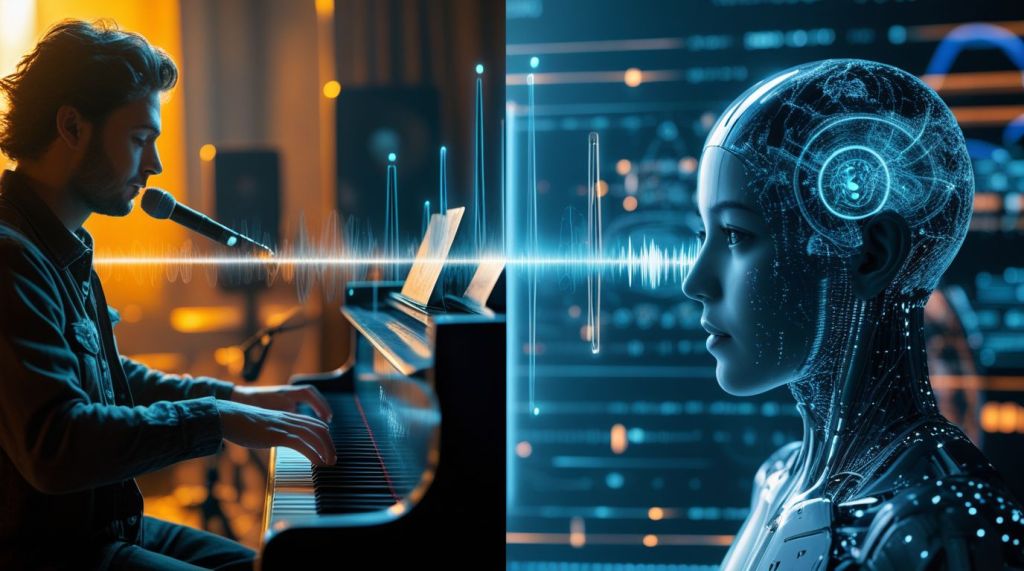
Not long ago, the idea that a computer could compose music, produce songs, or perform on stage sounded like science fiction. Today, it’s a part of reality. Artificial intelligence doesn’t just assist musicians — it’s becoming one. But the real question remains: can AI truly create music with soul, or is it just making sophisticated noise?
When Algorithms Enter the Studio
AI has already transformed how music is written, recorded, and produced. From beat-making tools to intelligent mastering systems, algorithms can now handle tasks that once required an entire studio crew. Many modern producers even rely on AI plugins to refine sound quality or generate creative ideas.
For a deeper dive into how this transformation happens in practice, check out From Studio to Stage: How AI Is Transforming Music Production and Performance. It’s fascinating to see how machines are becoming part of the creative team — sometimes even taking the spotlight.
What Makes Music “Human”?
Music has always been more than notes and rhythms. It’s about emotion — the trembling voice, the imperfect guitar strum, the pause that says more than words. AI can imitate all of this, but it doesn’t feel it. It doesn’t know heartbreak or euphoria. It simply recognizes patterns that evoke emotion in us.
That’s why songs generated by machines, while impressive, often feel like a beautiful echo rather than an original voice. They can move us for a moment, but something intangible is missing — that spark of human vulnerability.
The Ethical Question: Whose Music Is It?
As AI-generated songs flood streaming platforms, a new problem arises: who owns the rights to them? Is the “composer” the programmer, the user who gave the prompt, or the machine itself?
These are not just legal puzzles but moral ones. If a computer creates a melody that moves millions, does it deserve recognition — or is it simply a tool?
For a thoughtful exploration of these dilemmas, read The Ethics of AI-Generated Music: Who Owns Creativity?. The line between inspiration and authorship has never been blurrier.
Collaboration, Not Competition
Instead of fearing AI, many musicians are starting to embrace it as a creative partner. It can offer chord progressions you’d never think of, analyze your mix in seconds, or help you finish a song that’s been stuck for months. In that sense, AI becomes a mirror — reflecting your ideas and pushing you to evolve.
But there’s a limit to what it can do. AI can generate infinite variations, but it can’t know why a melody makes someone cry. That “why” comes from life, memory, and emotion — things only humans carry.
The Future of Musical Emotion
Looking ahead, the collaboration between humans and machines will likely deepen. We’ll hear songs written partly by AI, performed by holograms, and mixed in virtual studios. Yet even then, the emotional heartbeat of music will depend on us.
For a glimpse of how AI might reshape what we listen to in the coming years, visit The Next Decade of Music: How Artificial Intelligence Will Shape What We Hear. The future may sound different, but it will still need human emotion to resonate.
So, Who Creates Better?
Maybe that’s the wrong question. It’s not about who creates better, but how humans and machines can create together. AI is the brush; we are the artists. It gives us speed, inspiration, and new possibilities — but only we can give music its heart.
Because in the end, soul can’t be coded. It has to be felt.
 Tinytunes.app