
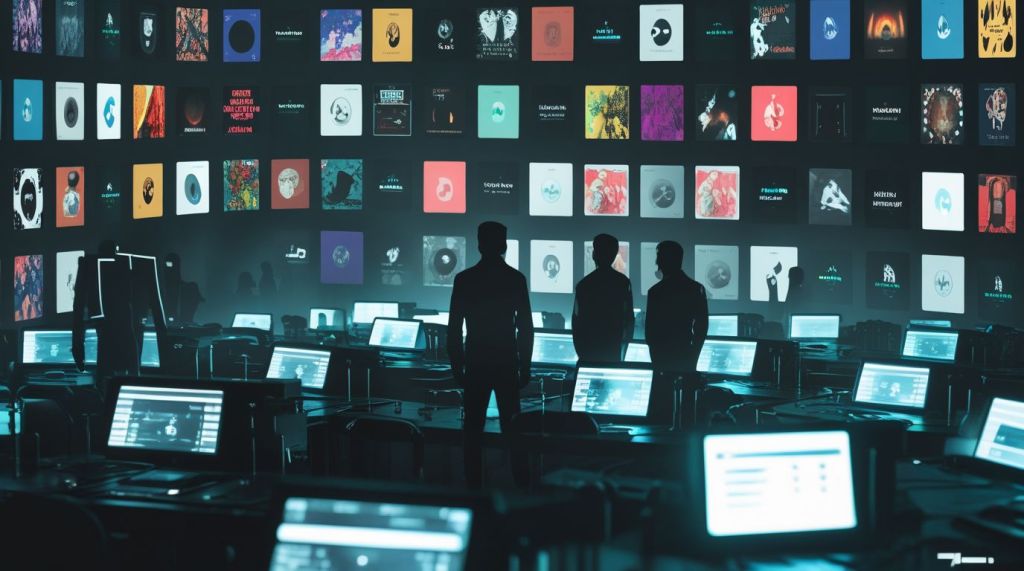
The music-streaming economy—once hailed as a democratizing force that let anyone with a laptop reach a global audience—now faces a fast-growing scam that threatens artists and listeners alike. Fraudsters are using cheap generative-AI tools to produce mountains of throwaway tracks, then routing plays to those tracks through bot farms and fake accounts. The result: royalties siphoned away from real creators, charts polluted with manufactured hits, and platforms forced into an escalating arms race between synthesis and detection. This article explains how the scam works, why it matters, what platforms and regulators are doing, and how artists and listeners can respond.
How the scam works
The playbook is shockingly straightforward. Using AI song generators, bad actors create thousands—sometimes hundreds of thousands—of short, formulaic tracks that mimic common pop structures or ambient loops. They upload that mass-produced content to streaming services. Then, using networks of bots, scripted listeners, or compromised accounts, they generate thousands of fake plays. Each track earns only tiny royalties, but when multiplied across a massive catalog, the revenue becomes significant. Because the plays are spread out, fraudsters often stay below the radar, making detection difficult.
Real cases and scale
Authorities have already revealed cases where billions of fake streams brought in millions of dollars in fraudulent royalties. Some platforms report removing tens of thousands of AI-generated tracks in a single sweep, underscoring how vast the problem has become. What was once considered a marginal issue for digital platforms has now escalated into a full-blown industry crisis.
Why this hurts real musicians
The damage is real and multi-layered:
1. Lost revenue. Subscription and ad money is divided according to total streams. Fake plays dilute the pool, cutting earnings for genuine artists.
2. Discovery problems. Algorithms designed to recommend music often highlight songs with high engagement. When fraudulent tracks dominate, authentic music becomes harder to find.
3. Trust erosion. If playlists and charts are packed with low-quality, AI-made filler, listeners lose confidence in platforms, damaging the reputation of the entire industry.
What platforms are doing
Streaming services are not ignoring the issue. Some have introduced visible labels for AI-generated content, others have invested in detection tools and stronger anti-fraud systems. There are also industry-wide collaborations designed to share data and develop common standards. Still, this is a challenging battle: AI technology evolves rapidly, making synthetic tracks harder to distinguish from human-made music. And while detection tools are improving, fraudsters constantly adapt their methods.
Why the scam is attractive
The economics make sense for scammers. Instead of chasing one big viral hit, they create a vast network of small revenue streams. This approach is harder to detect, spreads risk, and exploits weaknesses in distribution systems that were not built for industrial-scale fraud. It’s a reminder that the streaming economy, while lucrative, is still vulnerable to manipulation.
What can be done
For platforms:
• Strengthen identity checks when artists or distributors upload tracks.
• Improve algorithms that detect suspicious listening patterns.
• Introduce clear systems for reclaiming fraudulent payouts.
For musicians:
• Monitor royalty reports for suspicious trends.
• Use tools that mark or watermark original works.
• Advocate for more transparent distribution practices.
For listeners:
• Support artists directly through follows, playlists, and purchases.
• Report suspicious accounts or repetitive low-quality releases.
• Stay aware that not all tracks on a platform come from genuine creators.
Legal and regulatory action
Governments have started to treat streaming fraud as a serious financial crime. Prosecutors are targeting large-scale operations, and lawmakers are debating whether copyright and digital media laws should be updated to address AI-driven abuse. This growing attention means that fraudsters may soon face not only platform bans but also significant legal consequences.
A fragile future—or an opportunity?
There are two possible futures. In one, the music ecosystem becomes so saturated with artificial content that human artistry struggles to be heard. In the other, platforms, artists, and listeners use technology to safeguard creativity, ensuring that streaming remains a viable and fair model. The outcome depends on decisions being made right now—about transparency, regulation, and how much value society places on authentic music.
Further reading on our blog
• Musicians boycott Spotify when art clashes with military tech
• When AI becomes the artist: musicians push back against the rise of virtual performers
 Tinytunes.app