
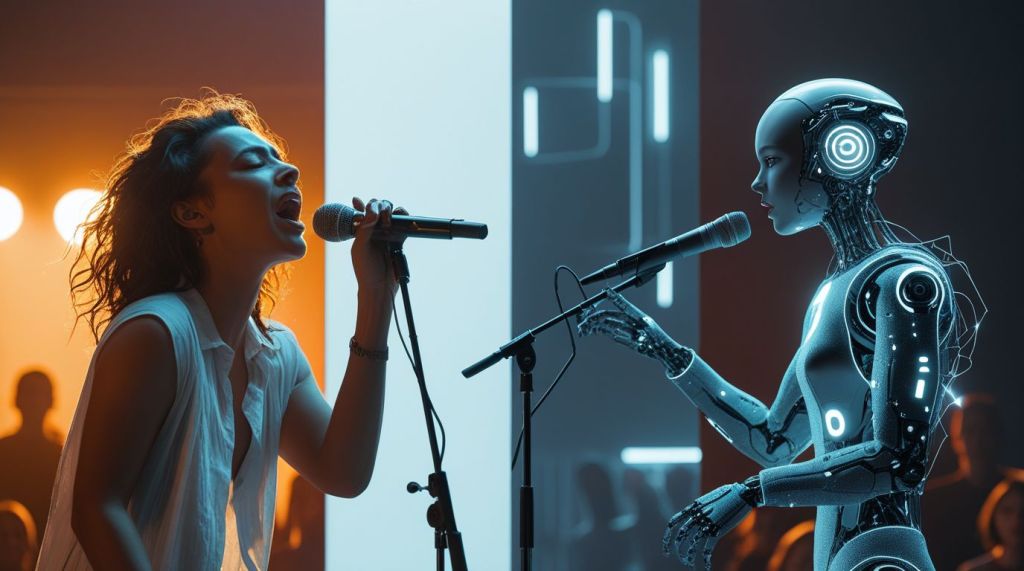
The music industry has always thrived on reinvention. From vinyl to streaming, from analog synthesizers to digital workstations, each technological leap has shifted the way artists create and audiences consume music. But the arrival of AI-generated performers — virtual artists who sign contracts worth millions — has triggered an entirely different type of debate. This is not simply about a new instrument or recording format. It is about what it means to be an artist, and whether algorithms should ever be granted the same cultural space as human creators.
The Spark That Lit the Debate
The latest wave of controversy erupted when reports surfaced of AI-generated musicians securing lucrative deals with major record labels. These virtual performers, designed through machine learning models trained on massive libraries of human-created music, were not only being distributed on streaming platforms but also promoted as full-fledged artists. Some had their own music videos, fan accounts, and even merchandise campaigns.
For many listeners, the novelty was exciting. For many musicians, however, it felt like a tipping point. R&B singer Kehlani was one of the first major voices to speak out, questioning the fairness of giving machines the same stage as artists who dedicate years — often decades — to perfecting their craft. Her comments sparked a flood of responses across social media, highlighting the tension between innovation and exploitation.
The Fear of Displacement
At the heart of this discussion lies an uncomfortable truth: musicians are already fighting an uphill battle in the streaming era. Payouts from platforms like Spotify are notoriously small, and touring — once a reliable source of income — is still recovering from the disruptions of the pandemic. Against this backdrop, the idea of labels investing millions into virtual performers feels, to many, like a betrayal.
Why pay a human artist when an AI can deliver endless tracks without demanding royalties, healthcare, or creative control? This fear of displacement is not abstract. It echoes what has already happened in industries like journalism, illustration, and customer service, where automation has replaced or devalued human labor.
Authenticity Versus Efficiency
Yet the pushback is not only about economics. Music, at its core, is an emotional and cultural language. Listeners don’t just consume sound waves; they connect to the stories, struggles, and triumphs of the people who create them. When Beyoncé sings about resilience or Kendrick Lamar raps about systemic injustice, the power lies in their lived experiences.
An AI-generated artist, no matter how technically impressive, cannot replicate that authenticity. The machine has no heartbreak to process, no social history to confront, no cultural roots to draw from. It may imitate the form, but not the substance. That distinction is central to the argument raised by artists like Kehlani, who warn that mistaking imitation for authenticity risks hollowing out the very soul of music.
The Industry’s Perspective
Record labels, of course, see things differently. For them, AI-generated musicians are not replacements but experiments. A virtual performer can test new sounds, engage fans in interactive experiences, and even expand into markets where human logistics — visas, schedules, health — might complicate live performances.
Moreover, AI-driven projects often attract press coverage and online virality, both of which translate into clicks, streams, and revenue. To the executives who sign these contracts, it’s less about undermining artists and more about diversifying the creative portfolio. They argue that the industry has always integrated technology — from autotune to hologram concerts — and that AI is simply the next frontier.
Where Artists Draw the Line
Still, many musicians insist there must be limits. One growing demand is for greater transparency: if a track was created by an AI model, it should be clearly labeled as such. Hidden automation, they argue, misleads listeners and devalues human labor.
Others push for regulatory measures, such as requiring AI models to credit and compensate the artists whose music is used as training data. Without these safeguards, they warn, the technology risks becoming a form of cultural extraction — benefiting corporations at the expense of the very communities that built the art form.
The Middle Ground: Collaboration, Not Competition
Despite the polarization, there is room for nuance. Some artists see AI not as a rival but as a tool — one that can spark inspiration, generate ideas, or break creative blocks. Just as drum machines once threatened to replace drummers but ultimately expanded the sonic palette of popular music, AI could become another instrument in the studio.
The difference, however, lies in authorship. Musicians who use AI as part of their creative process remain in control of the vision and message. Virtual performers designed to replace artists, on the other hand, cross into more ethically contested territory.
What This Means for the Future
The conversation around AI musicians is not going away. As the technology advances, the industry will be forced to answer difficult questions:
• Should AI-generated tracks compete directly with human artists on streaming platforms?
• How should royalties and rights be distributed when AI models are trained on copyrighted music?
• Will audiences embrace virtual performers long-term, or will the novelty fade once the hype wears off?
The answers will shape not only the economics of music but also its cultural role. For centuries, music has been humanity’s way of sharing emotion, memory, and identity. Whether AI can contribute to that legacy — or merely mimic it — remains to be seen.
Final Thoughts
The rise of AI-generated musicians is both exhilarating and unsettling. It forces us to rethink what artistry means in a digital age. While record labels chase efficiency and novelty, human artists remind us that music is not just about sound but about lived experience.
The path forward will likely involve compromise: using AI as a creative partner while safeguarding the value of human expression. For now, one thing is clear — the debate has only just begun, and the outcome will redefine the soundtrack of the future.
 Tinytunes.app