
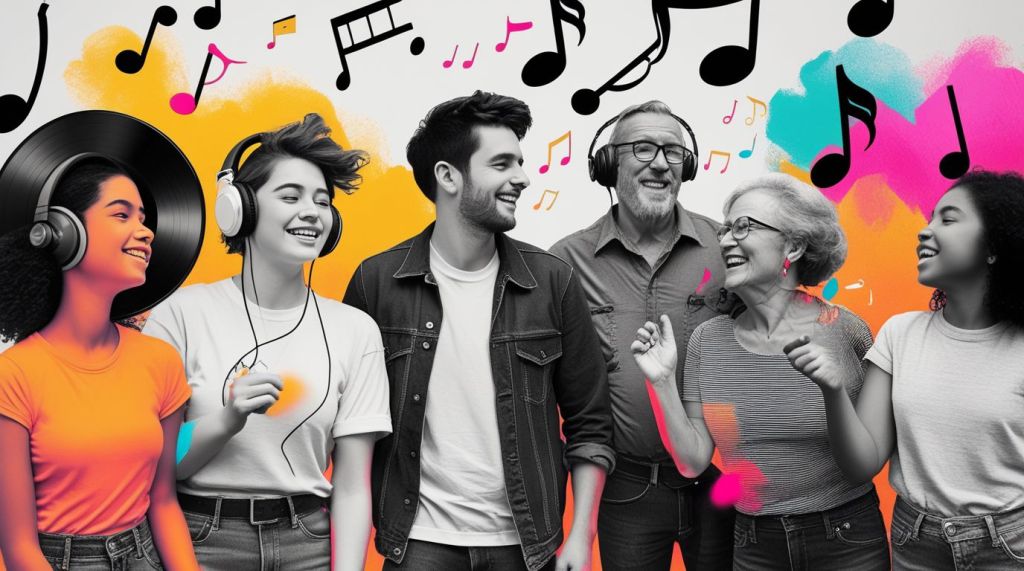
When we think about music and generations, the conversation often revolves around differences: Gen Z streaming on Spotify, Boomers holding onto vinyl, or Millennials nostalgic for their iPods. But what if, instead of focusing on contrasts, we zoom in on what unites us? Despite changing technologies and cultural shifts, there are common touchpoints that make music a truly universal language across generations.
🎤 The Timeless Power of Live Performances
No matter the era, live concerts and music festivals have always been spaces of collective joy. Boomers flocked to Woodstock, Gen X filled arenas for rock legends, Millennials turned Coachella into a cultural symbol, and Gen Z/Alpha are experiencing virtual concerts inside video games like Fortnite.
The format changes, but the essence remains the same: the magic of being part of a crowd, singing along to the same lyrics, feeling the beat in your chest. This shared ritual is one of the strongest bridges between generations.
📀 Nostalgia and Musical Inheritance
One of the most beautiful aspects of music is how it’s passed down. Parents share songs from their youth with children, and suddenly a teenager in 2025 is humming along to Fleetwood Mac or The Beatles. At the same time, older generations are introduced to today’s chart-toppers through their kids or grandkids.
This interplay creates cross-generational playlists where classic rock coexists with K-pop, and Motown sits comfortably next to hip-hop. The medium may shift — from cassettes to streaming — but the cycle of rediscovery remains strong. For a deeper dive into this transformation of formats, check out this piece on how music evolved from cassettes to streaming.
🎧 Shared Rituals in Listening
Think about the rituals that haven’t disappeared, only changed form:
• Making mixtapes in the 80s → creating Spotify playlists today.
• Listening to the radio together in the living room → sharing earbuds or AirPods with a friend.
• Saving up for a record or CD → subscribing to a music app.
Every generation develops its tools, but the underlying habit of curating and sharing music remains the same. We’re always looking for ways to personalize and spread the songs that matter most to us.
🌍 Music as a Cultural Bridge
Music doesn’t just connect individuals — it connects cultures. Through collaborations, global streaming platforms, and viral social media trends, songs now transcend borders faster than ever before. Gen Z and Alpha, in particular, are experiencing music as a global conversation. Their habits reflect not only what they like, but also how they engage with music socially and digitally. To better understand this unique perspective, see this exploration of what Gen Z and Alpha are listening to and how.
🎶 The Songs That Never Fade
Every generation has its anthems — songs that become larger than time. Queen’s Bohemian Rhapsody, Nirvana’s Smells Like Teen Spirit, Adele’s Someone Like You, and now viral hits that dominate TikTok. These tracks act as cultural markers, yet they’re rediscovered over and over by younger listeners.
The shared act of embracing these timeless songs creates an invisible thread between generations. It reminds us that while musical tastes evolve, emotional resonance remains constant.
💡 Why These Touchpoints Matter
By focusing on what connects us, rather than what divides us, we see music for what it truly is:
• A ritual that adapts but never disappears.
• A bridge between generations and cultures.
• A shared language that expresses joy, pain, love, and rebellion in equal measure.
Understanding these shared habits doesn’t just enrich our appreciation of music. It also helps us see how deeply interconnected we are, despite differences in age, technology, or cultural background.
Final Thoughts 🎵
Yes, Gen Z might live on TikTok playlists while Boomers still treasure vinyl. But step back, and the bigger picture is clear: music connects us all. The joy of discovering a new song, the nostalgia of hearing an old one, the thrill of live performance, or the simple comfort of shared listening — these experiences transcend generations.
Music changes, formats shift, trends rise and fall. Yet the heart of the experience stays the same. And maybe that’s the greatest proof that music is, and always will be, a universal language.
 Tinytunes.app