
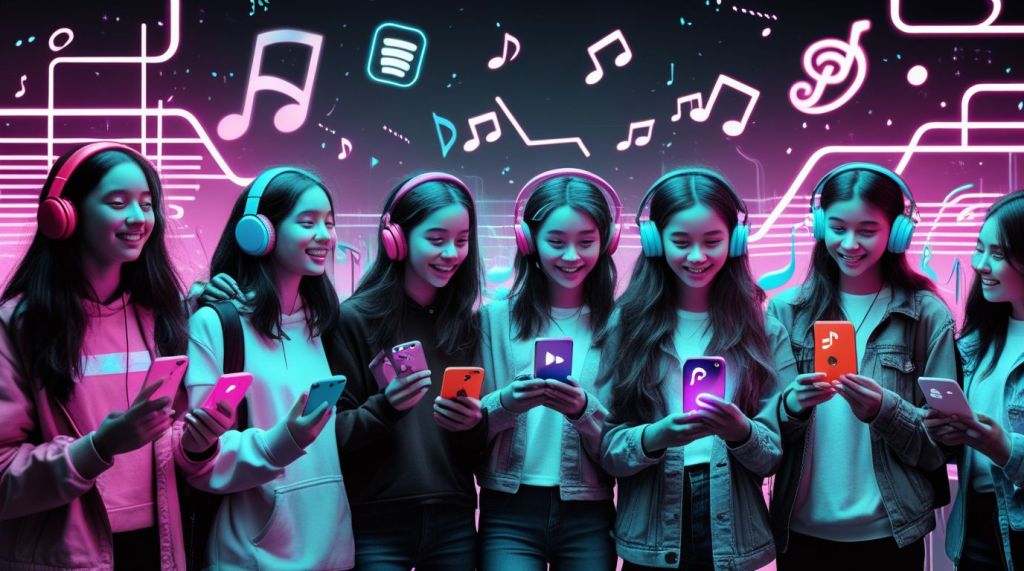
Music has always been more than just entertainment — it’s a way to connect, to express identity, and to belong. But if you ask today’s teens and young adults what they’re listening to, you’ll notice something fascinating: it’s not only about the music itself, but also about how they discover, share, and experience it.
Generations Z and Alpha are reshaping the landscape of the music industry. They’re digital natives, raised with smartphones, streaming apps, and social platforms. Their habits look very different from those of Millennials or Gen X, and the shift is changing how artists release music and how companies design platforms.
Let’s take a deep dive into what these generations are listening to, which apps dominate their playlists, and how short-form content is redefining the way music spreads. 🚀
The Platforms They Can’t Live Without 📱🎶
When it comes to apps, Gen Z and Alpha don’t just use one — they often bounce between several depending on the moment:
• Spotify – Still the leader for streaming, loved for its personalized playlists like Discover Weekly and Daily Mix. For many young listeners, Spotify Wrapped at the end of the year feels like a cultural holiday.
• Apple Music – Popular among iPhone users, offering high-quality audio and seamless integration with other Apple devices.
• YouTube Music – Strong with younger audiences who love switching between music videos and pure audio. For many, it’s where they first discover new tracks.
• TikTok – Not a traditional streaming app, but an absolute powerhouse for discovery. A 15-second clip can turn an unknown track into a global hit overnight.
The key here isn’t exclusivity — it’s flexibility. Gen Z and Alpha don’t pledge loyalty to a single platform. Instead, they use each app for its strengths: Spotify for daily listening, TikTok for trends, YouTube for visuals, and Apple Music for curated quality.
What They Actually Listen To 🎤🔥
So, what’s playing in the earbuds of these digital generations? The answer is: a mix of everything.
• Pop and hip-hop still dominate, but with global twists. K-pop, Latin music, and Afrobeat are exploding in popularity. 🌍
• Genre-blending is the norm. A single playlist might flow from rap to lo-fi beats to hyperpop in a matter of minutes.
• Nostalgia vibes: Interestingly, Gen Z has embraced older music too. Thanks to TikTok, songs from the ‘80s, ‘90s, and early 2000s suddenly climb back onto the charts.
• Short-form remixes: Many younger listeners discover tracks through sped-up edits, mashups, or 20-second highlights before even hearing the full song.
Music for these generations isn’t just about sound — it’s about mood, vibe, and shareability. Playlists aren’t organized by genre as much as by feelings: “study vibes,” “late-night driving,” “sad girl hours,” or “hype at the gym.”
The Rise of Short Clips and Viral Sounds 🎬🎵
Here’s where the real cultural shift happens. Unlike previous generations who discovered new music on the radio or through albums, Gen Z and Alpha meet music in bite-sized clips.
• TikTok dances, memes, and trends can skyrocket a track from obscurity to Billboard charts in days.
• YouTube Shorts and Instagram Reels amplify the cycle, creating a loop of endless exposure.
• Artists now deliberately release snippets of their songs designed to “go viral” — catchy hooks, relatable lyrics, or beats perfect for looping in a video.
In short, these generations don’t just listen to music — they live inside it. Music is tied to visual content, to viral challenges, to identity.
How Their Approach to Discovery Is Different 🔍✨
One of the biggest differences between Gen Z/Alpha and older listeners is how they discover new music.
• Algorithm over radio: They trust Spotify’s recommendations or TikTok’s For You Page more than DJs or radio hosts.
• Peer-to-peer sharing: Playlists aren’t private — they’re social. Friends exchange Spotify links, post their “Top 5” on Instagram, or share their finds in group chats.
• Global openness: Language is no barrier. K-pop in Korean, reggaeton in Spanish, Afrobeat in Yoruba or Pidgin — all coexist in the same playlists without hesitation.
Music discovery is no longer a passive act — it’s an interactive, social experience.
What This Means for the Future 🚀🎶
As generations Z and Alpha grow older, their habits will likely shape the future of the industry:
• Expect more short-form content to be integrated directly into music apps.
• Playlists will continue to beat albums as the main listening format.
• Genres will blur even more, creating a borderless soundscape where global influences mix daily.
• Artists will focus on building communities, not just fan bases, because listeners want connection as much as music.
Final Thoughts ❤️🎧
Generations Z and Alpha remind us that music is alive, evolving, and deeply tied to culture. They don’t just stream songs — they turn them into moments, into memes, into movements.
For them, music is about expression, discovery, and community. Whether it’s a viral TikTok track, a chill lo-fi beat for studying, or a global hit in a language they don’t speak, one thing is certain: the way they listen is reshaping the entire industry.
So the next time you hear a song blow up out of nowhere, remember — it might just be the magic of a new generation pressing play. 🎶✨
 Tinytunes.app