
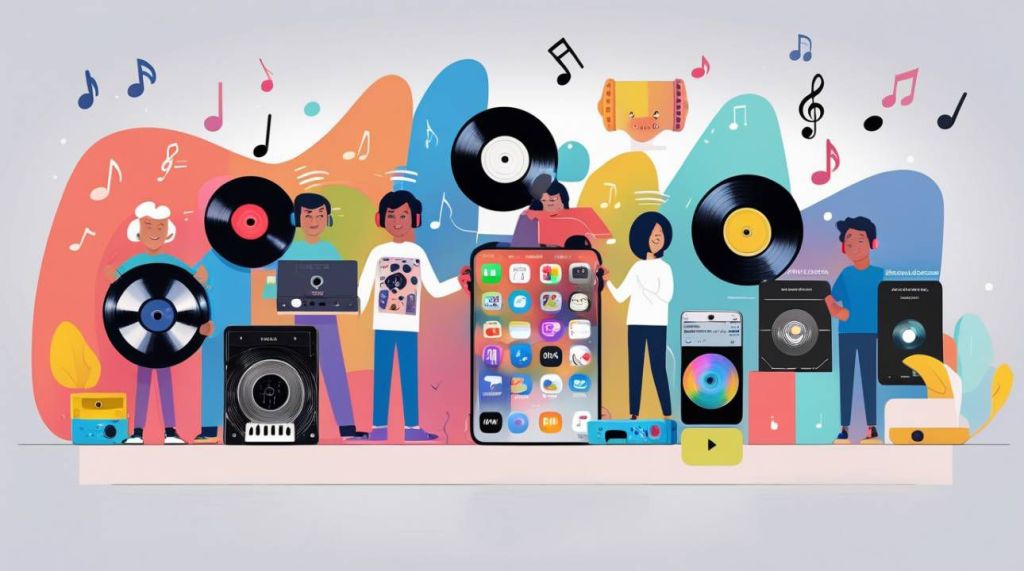
Music has always been a universal language that transcends borders, cultures, and generations. Yet, the way we consume music has dramatically changed over the past decades. Each generation has not only experienced music differently but has also embraced distinct formats and technologies that shaped their listening habits. Let’s take a journey through time, from the era of Baby Boomers to the emerging Gen Alpha, exploring the evolution of music formats and the apps and services that have defined each generation’s soundtrack. 🎵
Baby Boomers (Born 1946–1964) – The Era of Vinyl and Cassettes 📼
For Baby Boomers, music was tangible. Before the age of digital streaming, listening to music meant owning a physical copy. Vinyl records were a cornerstone of musical enjoyment, offering a rich and warm sound that collectors still cherish today. By the late 1970s and 1980s, cassettes became a symbol of personal music freedom. Suddenly, people could make mixtapes, share favorite songs with friends, or enjoy music in their cars.
Popular artists during this era included The Beatles, The Rolling Stones, and Motown legends like Stevie Wonder. Radios and record players were primary tools, but cassettes gave listeners a more portable and personal experience. Music consumption was as much about the ritual of playing a record or rewinding a tape as it was about the music itself. 📻
Key Music Platforms for Baby Boomers:
• Vinyl records
• Cassette tapes
• AM/FM Radio
• Live concerts and festivals
Generation X (Born 1965–1980) – CDs and the Dawn of Digital 🎧
Gen X witnessed a technological shift that redefined music consumption. Compact Discs (CDs) emerged in the early 1980s, promising higher sound quality and greater durability than vinyl or cassettes. For many, owning a CD collection became a source of pride, and the convenience of skipping tracks without rewinding or flipping a tape revolutionized listening habits.
The 1990s introduced digital audio formats, particularly the MP3. Suddenly, music could be stored on computers, burned onto CDs, and even shared through early file-sharing platforms like Napster. Music was no longer entirely tied to physical formats, opening the door to the digital age.
Artists like Nirvana, Tupac Shakur, and Madonna defined the soundtrack of Generation X. Music was a personal journey but also a social experience, as mixtapes and CDs were frequently swapped among friends. 🎸
Key Music Platforms for Gen X:
• Compact Discs (CDs)
• Cassette tapes (still popular)
• MP3 files
• Radio and early music television (MTV)
• Early online music sharing platforms
Millennials (Born 1981–1996) – MP3s and the Rise of Streaming 📱
Millennials grew up alongside the internet, making them the first generation to fully embrace digital music. MP3 players, like the iconic iPod, allowed for thousands of songs to fit in a pocket, revolutionizing how music was accessed and carried. The 2000s also saw the rise of peer-to-peer platforms like LimeWire, which, for better or worse, changed the landscape of music distribution forever.
By the late 2000s, streaming began to emerge as a major force. Platforms like Spotify, launched in 2008, made it possible to access millions of tracks instantly, creating an entirely new way to discover and enjoy music. Millennials, in particular, thrived on playlists, curated recommendations, and the social sharing of songs online. 🎶
Popular artists for Millennials ranged from Beyoncé and Coldplay to Eminem and Lady Gaga. Music became a highly personal yet globally shared experience, bridging the gap between technology and cultural expression.
Key Music Platforms for Millennials:
• MP3 players (iPods, MP3 CDs)
• Online music stores (iTunes, Amazon Music)
• Early streaming services (Pandora, Spotify, YouTube)
• Social media platforms (MySpace, Facebook) for music sharing
Generation Z (Born 1997–2012) – Streaming as a Lifestyle 🌐
Generation Z has never known a world without streaming. Platforms like Spotify, Apple Music, and YouTube have become the norm, offering instant access to virtually every song ever recorded. Unlike previous generations, Gen Z doesn’t necessarily “own” music; they stream it, create playlists, and engage with music through social media trends, TikTok dances, and viral challenges.
This generation’s listening habits are highly curated and social. Music discovery often comes through friends, influencers, or trending content rather than traditional radio or even albums. Gen Z has also embraced visual and interactive elements of music, from music videos to augmented reality experiences.
Artists like Billie Eilish, BTS, and Olivia Rodrigo dominate the Gen Z soundscape, reflecting a generation that values diversity, authenticity, and connectivity in music. 🎤
Key Music Platforms for Gen Z:
• Spotify, Apple Music, Amazon Music
• YouTube and YouTube Music
• TikTok and Instagram Reels for music discovery
• Podcasts and live-streamed concerts
Generation Alpha (Born 2013–2025) – The Era of Smart Devices and AI Music 🤖
Generation Alpha is still growing up, but their musical landscape is already defined by smart devices, AI-powered recommendations, and immersive technologies. Kids in this generation are introduced to music through voice assistants like Alexa or Google Home, interactive apps, and curated playlists designed for learning, relaxation, or entertainment.
Expect the Alpha generation to embrace ultra-personalized music experiences. AI will recommend tracks based on mood, activity, or even biometric feedback. Music consumption will likely be integrated seamlessly with other aspects of daily life, from gaming to virtual reality environments. 🕹️
Popular platforms for Generation Alpha include:
• Smart speakers and AI assistants
• YouTube Kids and Spotify Kids
• Music-integrated apps for learning and games
• VR/AR immersive music experiences
Conclusion: The Ever-Changing Soundtrack of Life 🎶
From the tactile joy of cassettes for Baby Boomers to the AI-curated playlists of Generation Alpha, each generation has experienced music uniquely. Formats and technologies have evolved, but the core connection remains: music reflects who we are, what we feel, and how we relate to the world around us.
No matter the format—whether spinning vinyl, burning CDs, downloading MP3s, or streaming a curated playlist—the power of music to inspire, comfort, and unite remains timeless. And as technology continues to advance, one thing is certain: music will always evolve alongside us, shaping and reflecting our generational experiences. 🌟
 Tinytunes.app