
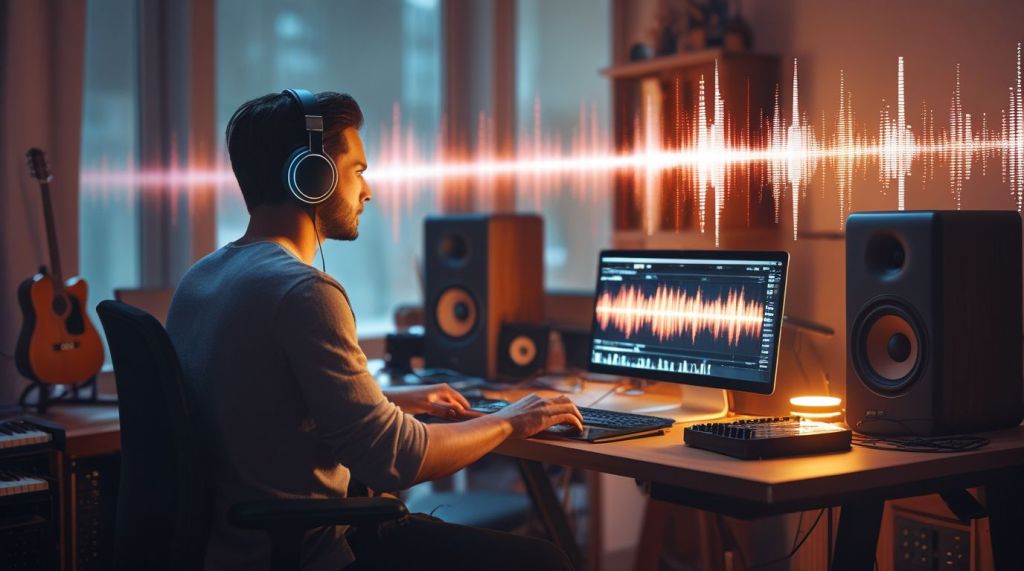
Artificial intelligence has entered almost every creative field — from visual art to writing — and music is no exception. Today, musicians around the world are experimenting with AI-powered tools. Some use them to generate melodies, others to polish arrangements, and many to overcome creative blocks.
But let’s address the big question: does AI replace the musician? Absolutely not. Instead, it can become a supportive partner, expanding possibilities while leaving the soul of music — human creativity and emotion — in the artist’s hands.
How AI Supports the Creative Process 🎹
AI is not here to take away inspiration; rather, it acts as a catalyst. Here’s how:
1. Idea generation
Tools like AIVA, Amper, or MuseNet can create chord progressions, beats, or even entire drafts of songs. They provide a “starting canvas” when inspiration feels stuck.
2. Experimentation
Want to hear how your melody sounds in jazz, electronic, or orchestral style? AI can instantly re-arrange and let you test new genres without hiring a full band.
3. Efficiency
Time-consuming tasks like cleaning audio tracks, balancing sound levels, or generating backing vocals can be automated, leaving more time for true creativity.
4. Personalized practice
Some platforms adjust backing tracks to your instrument and skill level, turning practice into a more engaging and productive experience.
Human Creativity: The Irreplaceable Ingredient 🎤💡
While AI can generate impressive results, it lacks what makes music truly powerful: emotions, life experience, and authenticity.
• A computer can suggest a melody, but only a human can decide whether it communicates sadness, joy, or rebellion.
• AI can replicate genres, but it cannot invent cultural context or reflect personal stories.
• Music becomes meaningful when an artist shares their unique perspective — something no algorithm can imitate.
In other words, AI is a tool, not a voice. The artist remains the storyteller.
Real-World Examples of AI in Music 🌍🎵
• Taryn Southern, an American singer, used AI to co-create her album *I AM AI*. She described the process as “co-writing with a super-powerful bandmate” — but the final emotion and lyrics still came from her.
• Endel, an AI app, generates personalized soundscapes for focus and relaxation. Yet when musicians collaborate with it, they tailor these soundscapes to reflect deeper moods and atmospheres.
• Film composers often use AI-generated drafts to quickly explore musical themes, then refine them into emotionally rich scores for cinema.
These cases show that AI works best when musicians remain in control, guiding and reshaping what the machine produces.
Practical Tips for Musicians Using AI 🎧✅
1. Use AI for sketches, not finished products. Treat generated content as raw material that you refine into art.
2. Always add your human touch. Lyrics, dynamics, and emotional interpretation should remain yours.
3. Experiment across genres. Let AI show you possibilities you might not consider, then decide which ones resonate.
4. Stay authentic. Don’t rely too much on algorithms; let them inspire, not define.
5. Learn continuously. New AI tools appear monthly. Explore them, but filter through your artistic vision.
Conclusion 🎯
AI will never replace musicians, because music is more than sound — it’s a reflection of the human soul. What AI can do is accelerate the technical side, spark new ideas, and free artists from routine.
The most powerful formula is simple:
AI generates possibilities, but humans transform them into emotions.
So, if you’re a musician, don’t fear the rise of AI — embrace it as a creative ally. Use it to experiment, save time, and push your artistic boundaries, but always remember: the melody of life is written by you. 🎶💙
 Tinytunes.app