
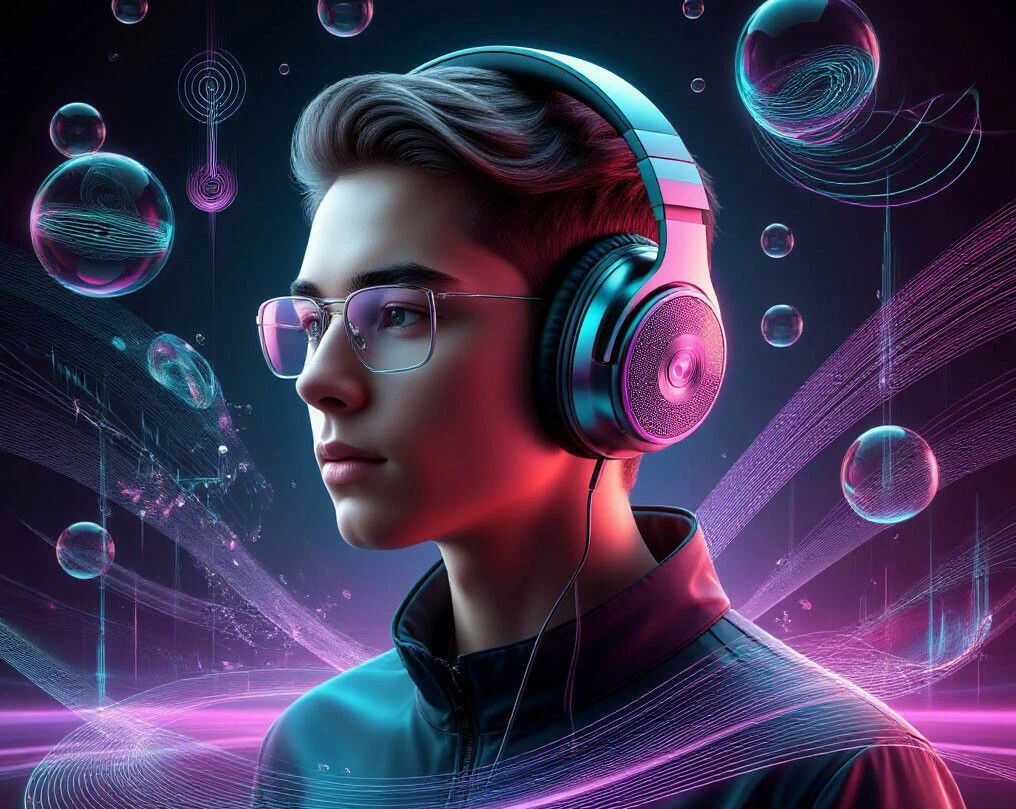
Imagine listening to your favorite song… but instead of the sound just hitting your ears from the left and right, it swirls around you — above, behind, and all around. You don’t just hear the music… you’re inside it. Welcome to the world of Spatial Audio — the 3D revolution that’s reshaping how we experience sound. 🎶🌀
In 2025, this once-futuristic technology is becoming mainstream, and it’s changing everything — from how we listen to pop songs to how we watch movies or play video games. Let’s dive into this immersive world and see why Spatial Audio is the next big leap in music.
🔍 What Is Spatial Audio, Exactly?
Unlike traditional stereo sound (which sends audio to the left and right channels), Spatial Audio creates a three-dimensional sound field. It mimics the way we hear sound in real life — from every direction. Up, down, behind you, or right next to your ear — spatial sound gives the illusion that you’re sitting right in the middle of the action.
🎧 Think of it like this:
Stereo = a flat stage.
Spatial Audio = a full 360° concert hall.
It’s not just a fancy effect — it’s powered by complex sound engineering, algorithms, and, in some cases, head-tracking sensors that adjust the audio based on your movement. Super smart, right?
🧠 Why Does It Feel So Real?
The magic of Spatial Audio lies in something called “binaural processing” and head-related transfer functions (HRTFs). These simulate how our ears naturally perceive the direction and distance of sounds. When used with headphones or certain speaker setups, it tricks your brain into believing sound is coming from specific physical spaces.
✅ The result?
• A singer’s voice feels like it’s in front of you
• The guitar riff slides past your left shoulder
• The drums boom like they’re behind you on stage
It’s cinematic, immersive, and almost surreal. 🎬🔊
—
🕹️ Where Are People Using It?
Spatial Audio isn’t just for music fans. It’s everywhere now:
🎵 In Music Streaming
Platforms like Apple Music, Amazon Music, and Tidal have started offering Spatial Audio tracks, mixed in formats like Dolby Atmos Music or Sony 360 Reality Audio. More and more artists are remixing old albums in 3D and even creating new songs specifically for Spatial Audio.
🎮 In Gaming
Games with Spatial Audio give players a competitive edge — you can hear exactly where footsteps, gunshots, or whispers are coming from. It’s more realistic, intense, and, yes — sometimes terrifying 😱.
🎥 In Movies & TV
Dolby Atmos soundbars and headphones now bring theater-like experiences right into your living room. Dialogue sounds clearer, effects feel deeper, and you’re more emotionally pulled into every scene.
🎧 Do You Need Special Gear?
Good news — you don’t need a spaceship to enjoy this kind of sound 🚀
👂 For Headphones:
• Many Spatial Audio experiences work with regular stereo headphones.
• For best results, some devices include dynamic head tracking (like newer Apple AirPods or Sony headphones), which adapts sound based on your movements.
🔈 For Speakers:
• Soundbars with upward-firing speakers simulate height and depth.
• High-end home theater systems are designed to bounce sound across the room for full immersion.
You can go high-end, but the cool part? You don’t have to.
🔮 The Future of Music Is… 3D?
Here’s what makes Spatial Audio truly exciting — it’s not just a gimmick. It’s changing how artists create.
Producers now compose and mix music in 360 degrees. That means:
Instruments can “travel” around you
Vocals can echo from specific directions
Sounds can build up behind you and explode outward 🌌
It’s turning songs into experiences, not just recordings. Some people compare it to the transition from black-and-white TV to full-color HD. Once you’ve heard music this way, it’s hard to go back.
🗣️ But Is It Always Better?
Not necessarily — Spatial Audio isn’t a magic solution for all songs. Some genres (like orchestral or ambient) naturally benefit from spacious arrangements. Others (like punk or lo-fi) might feel less authentic when spread out in 3D space.
And yes, badly mixed Spatial Audio can feel weird or disorienting. The key lies in quality mixing and letting the music dictate the soundscape — not the other way around.
Still, when done right? It’s next-level. 🚀🎶
🧩 Final Thoughts
Spatial Audio isn’t just a trend — it’s a transformative step forward in the way we engage with sound. Whether you’re discovering your favorite album all over again or simply zoning out with headphones in bed, 3D sound adds new dimensions — literally — to the listening experience.
So next time someone says, “You’ve gotta hear this,” ask:
“Is it in Spatial Audio?” 😉
 Tinytunes.app
Pingback: 🎶 The Future of Music Listening: Where Hardware Meets Immersive Audio – Tinytunes.app