
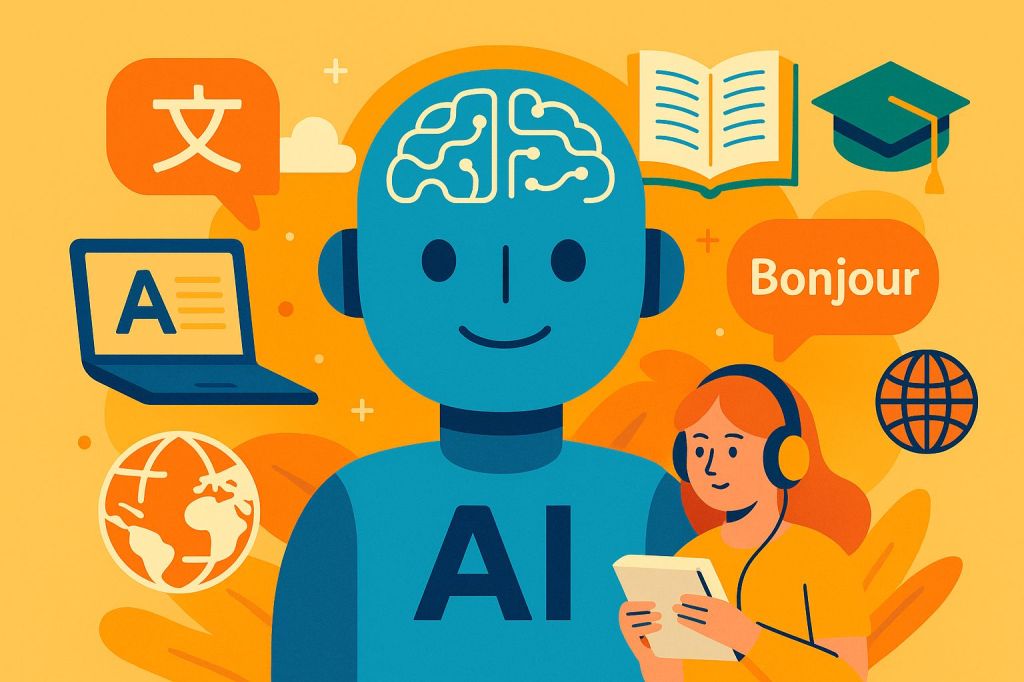
In a world where global communication is more essential than ever, speaking just one language often isn’t enough. Whether you’re a blogger trying to reach an international audience, a student learning a second language, or a business owner expanding to new markets — language matters. And here’s the good news: artificial intelligence (AI) is transforming how we translate content and learn languages.
Let’s dive into how AI is helping people go multilingual faster, easier, and smarter than ever before 🚀
🧠 The Rise of AI-Powered Translation
Not long ago, machine translation meant awkward, robotic sentences that barely made sense. But thanks to AI, especially natural language processing (NLP), tools like Google Translate, DeepL, and ChatGPT have become impressively accurate and context-aware.
These modern translators can:
• Understand idioms and slang 🌐
• Detect the tone of a sentence (formal vs casual)
• Keep consistent terminology across large documents
• Offer suggestions in real time as you type
Imagine writing an article in English and instantly translating it into fluent Spanish, French, or Japanese — all while preserving your tone and message. That’s the power of AI.
✍️ AI in Content Creation for Multilingual Blogs
If you run a blog or website, offering multilingual versions of your content can boost your audience dramatically. But hiring translators for every post can be expensive and time-consuming. This is where AI saves the day.
Here’s how content creators are using AI for translation:
• Writing articles in one language and translating them instantly with DeepL or ChatGPT
• Using plugins like Weglot or TranslatePress on WordPress for seamless multilingual support
• Asking AI to localize content, not just translate — adapting humor, cultural references, and idioms for different audiences 🌏
Pro tip: You can even ask ChatGPT to adjust tone depending on the target audience, like making it more casual for Gen Z or more formal for professionals.
🗣️ AI for Language Learning: A Smart Study Buddy
Language learning used to mean flipping through textbooks or memorizing flashcards. AI has completely changed the game. Now, your language teacher can be in your pocket — literally.
Popular AI tools for learning languages include:
• Duolingo: Uses AI to personalize lessons and keep learners motivated with gamified rewards 🎯
• Memrise: Offers native speaker videos and real-time AI feedback
• ChatGPT: Can roleplay as a conversation partner in your target language, correct your grammar, and explain vocabulary in context 🧑🏫
You can ask ChatGPT:
> “Pretend you’re a French waiter. Help me practice ordering at a restaurant.”
Or:
> “Explain the difference between ‘ser’ and ‘estar’ in Spanish with examples.”
Suddenly, language learning becomes interactive, fun, and tailored to your pace.
📚 Benefits of Using AI in Language Learning
Using AI isn’t just convenient — it offers real, measurable benefits:
✅ Personalized learning – AI adapts to your strengths and weaknesses
✅ Instant feedback – Know right away if you’re making a mistake
✅ Cultural context – AI can explain why certain phrases are used
✅ Practice anytime, anywhere – No need to wait for a class or tutor
✅ Speech recognition – Apps can listen to your pronunciation and help improve it 🎧
Plus, learners often feel more confident practicing with AI than with real people — no judgment, no pressure.
💡 Real-Life Use Cases
Still wondering how people use AI to go multilingual? Here are a few examples:
• Content creators: Translate YouTube captions and blog posts to attract global views
• Students: Get help understanding foreign-language textbooks
• Travelers: Use AI translation apps to navigate, read menus, or ask for help abroad 🗺️
• Entrepreneurs: Localize websites and product descriptions for new markets
• Job seekers: Practice interview questions in another language
🚧 What to Watch Out For
AI is powerful, but it’s not perfect.
⚠️ Contextual mistakes: Sometimes translations miss subtle meanings
⚠️ Cultural nuances: Jokes or metaphors might not translate well
⚠️ Over-reliance: You still need to think and learn — AI is a tool, not a shortcut
Always review AI-generated translations before publishing or using them in formal settings.
🤖 Final Thoughts
Artificial intelligence is no longer the future — it’s your everyday assistant. Whether you’re a beginner trying to learn German or a pro blogger aiming to expand into Asia, AI can help you overcome language barriers and connect with the world.
The key? Learn to use it wisely.
So next time you think of hiring a translator or buying yet another grammar book… try talking to your favorite AI instead. It might just surprise you 😉
Have you used AI to translate or learn a language? Share your experience in the comments below! 🌟
 Tinytunes.app
Pingback: How AI is Making Education More Personalized Than Ever 🎓🤖 – Tinytunes.app